
Unlock Major Savings: New IRS Tax Credits for 2026 Offer Up to $7,500 for Energy Efficiency Rebates
As we approach the 2026 tax season, homeowners across the United States have a significant opportunity to save big while making their homes more energy-efficient. The Internal Revenue Service (IRS) is rolling out enhanced tax credits designed to incentivize sustainable living and reduce carbon footprints. These new provisions, part of ongoing federal efforts to promote clean energy, could allow you to claim up to $7,500 in rebates for qualifying home improvements. Understanding these IRS Energy Credits 2026 is crucial for maximizing your savings and contributing to a greener future.
The landscape of federal tax incentives for energy efficiency has been evolving, with recent legislation aiming to make these benefits more accessible and impactful. For 2026, the focus remains on encouraging homeowners to invest in upgrades that significantly reduce energy consumption and reliance on fossil fuels. From solar panels to heat pumps, and from efficient windows to advanced insulation, a wide array of improvements can qualify you for these generous credits. This comprehensive guide will break down everything you need to know about the IRS Energy Credits 2026, including who is eligible, what improvements qualify, how to claim your rebates, and strategies to ensure you get every dollar you’re entitled to.
Anúncios
Understanding the 2026 IRS Energy Credits Landscape
The federal government has a vested interest in promoting energy independence and environmental sustainability. Tax credits are a powerful tool to achieve these goals, directly reducing the amount of tax you owe, dollar for dollar. Unlike deductions, which only reduce your taxable income, credits provide a direct reduction in your tax liability, making them incredibly valuable. The IRS Energy Credits 2026 are a continuation and enhancement of existing programs, reflecting a sustained commitment to green initiatives.
These credits are primarily governed by sections of the tax code related to residential clean energy and energy-efficient home improvements. While specific details can be complex, the overarching goal is simple: reward homeowners who invest in technologies and materials that make their homes more efficient. The maximum credit amount of $7,500 is a compelling incentive, potentially offsetting a significant portion of your improvement costs. It’s important to note that these credits are generally non-refundable, meaning they can reduce your tax liability to zero, but you won’t get a refund for any excess credit beyond what you owe. However, some credits may be carried forward to future tax years, depending on the specific program. Understanding this fundamental aspect of IRS Energy Credits 2026 is the first step toward smart financial planning.
Key Legislation and Program Changes for 2026
The primary legislative framework underpinning these credits is often found within acts like the Inflation Reduction Act (IRA) of 2022, which significantly expanded and extended many clean energy incentives. While the IRA primarily covered periods leading up to and including 2025, specific provisions and annual adjustments mean that 2026 will see a continuation of these robust programs, potentially with updated guidelines or enhanced limits. It’s vital to stay informed about any new IRS publications or Congressional updates that might impact the IRS Energy Credits 2026.
For instance, some credits might shift from being annual limits to lifetime limits for certain improvements, or vice versa. The percentage of costs covered might also be adjusted. Historically, the credit amounts for certain technologies, like solar installations, have been a percentage of the total cost, while others, like specific home efficiency upgrades, have had fixed dollar limits. The $7,500 figure represents a potential cumulative total across various eligible improvements, not a single credit for one item. Therefore, strategic planning of your home improvements is key to maximizing your claim under the IRS Energy Credits 2026.
Who is Eligible for IRS Energy Credits in 2026?
Eligibility for the IRS Energy Credits 2026 generally revolves around being a homeowner and undertaking qualifying improvements on your primary residence. Here’s a breakdown of common eligibility criteria:
- Homeownership: You must own the home where the improvements are made. Renters are typically not eligible, as the credits are tied to property ownership.
- Primary Residence: The credits usually apply to your primary residence in the United States. This means the home you live in most of the time. Vacation homes or rental properties you don’t occupy may have different, or no, eligibility for these specific residential credits, though other commercial or rental property energy credits might exist.
- New vs. Existing Homes: Most credits are designed for existing homes, encouraging upgrades to older, less efficient structures. However, some clean energy credits, particularly for solar, can apply to newly constructed homes as well. Always check the specific requirements for each credit.
- Proof of Purchase and Installation: You will need to maintain meticulous records, including invoices, receipts, and proof of installation by qualified professionals, to substantiate your claim for IRS Energy Credits 2026.
- No Income Limitations (Generally): Unlike some other federal programs, many energy tax credits do not have specific income limitations, making them accessible to a broad range of taxpayers. However, the non-refundable nature means you need sufficient tax liability to benefit fully.
It’s crucial to consult IRS Publication 17, ‘Your Federal Income Tax,’ or specific forms and instructions for the tax year 2026 when they become available, as rules can be updated. Engaging with a qualified tax professional is also highly recommended to ensure you meet all criteria for the IRS Energy Credits 2026.
Qualifying Home Improvements for Maximum Rebates
The types of improvements that qualify for the IRS Energy Credits 2026 are diverse, covering a spectrum of technologies and materials aimed at boosting energy efficiency and promoting renewable energy. While the exact list and specific credit amounts can vary slightly year to year, here are the most common categories:
1. Residential Clean Energy Credits (e.g., Solar, Geothermal, Wind)
These are often the most generous credits and have been a cornerstone of federal energy policy. For 2026, homeowners can expect significant credits for installing:
- Solar Electric Property (Solar Panels): Installing solar panels to generate electricity for your home is a major investment that often yields the largest credits, typically a percentage of the total cost with no annual limit. This is a prime example of how to leverage IRS Energy Credits 2026 for substantial savings.
- Solar Water Heating Property: Systems that use solar energy to heat water for your home.
- Geothermal Heat Pumps: These systems use the earth’s stable underground temperatures to provide heating, cooling, and hot water, offering highly efficient climate control.
- Small Wind Energy Property: Wind turbines that generate electricity for residential use.
- Battery Storage Technology: For systems installed with a capacity of at least 3 kilowatt-hours, these credits help homeowners store renewable energy.
These credits are usually calculated as a percentage of the total expenditure, including installation costs, and often do not have an annual dollar limit, though they may have a phase-down schedule over time. This makes them particularly attractive for significant investments.
2. Energy Efficient Home Improvement Credits (e.g., Windows, Insulation, HVAC)
These credits focus on improving the thermal envelope and mechanical systems of your home, with specific dollar limits per improvement or per year. The maximum $7,500 cap for IRS Energy Credits 2026 often includes a combination of these smaller, but cumulatively significant, credits:
- Energy-Efficient Windows, Skylights, and Doors: Replacing old, inefficient windows and doors with ENERGY STAR certified models can significantly reduce heat loss or gain. There are usually specific U-factor and SHGC requirements.
- Insulation and Air Sealing Materials: Upgrading attic, wall, floor, or foundation insulation, as well as sealing air leaks, is fundamental to improving home energy performance. The materials must meet specific efficiency standards.
- High-Efficiency Heating, Ventilation, and Air Conditioning (HVAC) Systems:
- Heat Pumps (Air Source and Geothermal): Air-source heat pumps provide both heating and cooling efficiently. Geothermal heat pumps are covered under the clean energy credit.
- High-Efficiency Furnaces and Boilers: Natural gas, propane, or oil furnaces and hot water boilers that meet specific efficiency ratings.
- Central Air Conditioners: ENERGY STAR certified models with high SEER ratings.
- Water Heaters:
- Electric or Natural Gas Heat Pump Water Heaters: Highly efficient systems that extract heat from the air or ground.
- High-Efficiency Natural Gas, Propane, or Oil Water Heaters: Tankless or storage tank models meeting stringent energy factor requirements.
- Energy Audits: The cost of a home energy audit conducted by a qualified professional may also be eligible for a credit, helping you identify the most impactful improvements.
Each of these categories often has specific efficiency standards (e.g., ENERGY STAR certifications, specific SEER, AFUE, or U-factor ratings) that the products must meet to qualify. It’s imperative to verify these standards at the time of purchase and installation to ensure your eligibility for IRS Energy Credits 2026.
Maximizing Your $7,500 in IRS Energy Credits 2026
To fully capitalize on the IRS Energy Credits 2026 and potentially reach the $7,500 maximum, strategic planning and meticulous record-keeping are essential. Here’s how to approach it:
1. Plan Your Improvements Strategically
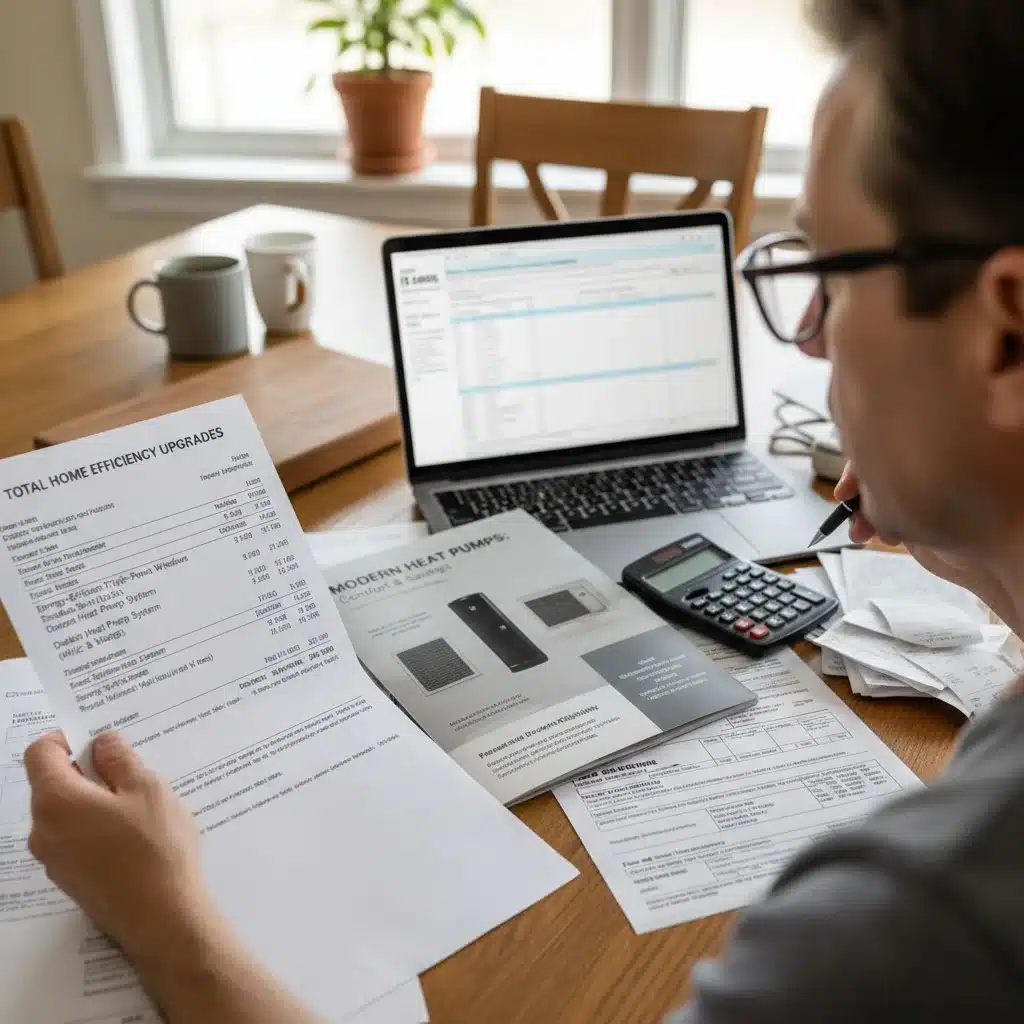
Don’t just make random upgrades. Consider a comprehensive home energy audit first. An audit can identify the most cost-effective improvements for your specific home, allowing you to prioritize upgrades that offer the best return on investment and maximize your tax credit potential. For example, a new heat pump might qualify you for a large credit, while combining it with insulation and new windows could push you closer to the $7,500 cap.
2. Understand Annual vs. Lifetime Limits
Some credits have annual limits, meaning you can claim a certain amount each year you make qualifying improvements. Others may have a lifetime limit for a specific type of improvement. For instance, the Energy Efficient Home Improvement Credit often has an annual limit (e.g., $1,200 for certain improvements, with specific sub-limits for windows, doors, etc.), while the Residential Clean Energy Credit (for solar, geothermal, etc.) typically does not have an annual cap. Understanding these distinctions is critical for long-term planning and maximizing your IRS Energy Credits 2026 over multiple years if needed.
3. Choose Certified Products and Professionals
To ensure eligibility, always purchase products that meet the specified efficiency standards (e.g., ENERGY STAR certified). Many credits also require that the installation be performed by a qualified professional. Keep all product certifications, labels, and contractor invoices. These documents are your proof of eligibility for the IRS Energy Credits 2026.
4. Keep Meticulous Records
This cannot be stressed enough. For each eligible improvement, you should keep:
- Invoices and Receipts: Clearly showing the cost of the materials and installation.
- Product Information: Including manufacturer, model number, and proof of efficiency ratings (e.g., ENERGY STAR labels, NFRC ratings for windows).
- Date of Installation: To verify it falls within the eligible tax year.
- Contractor Information: Name, address, and contact details of the professional who performed the installation.
These records are vital if the IRS ever audits your tax return. Without proper documentation, your claim for IRS Energy Credits 2026 could be denied.
How to Claim Your IRS Energy Credits 2026
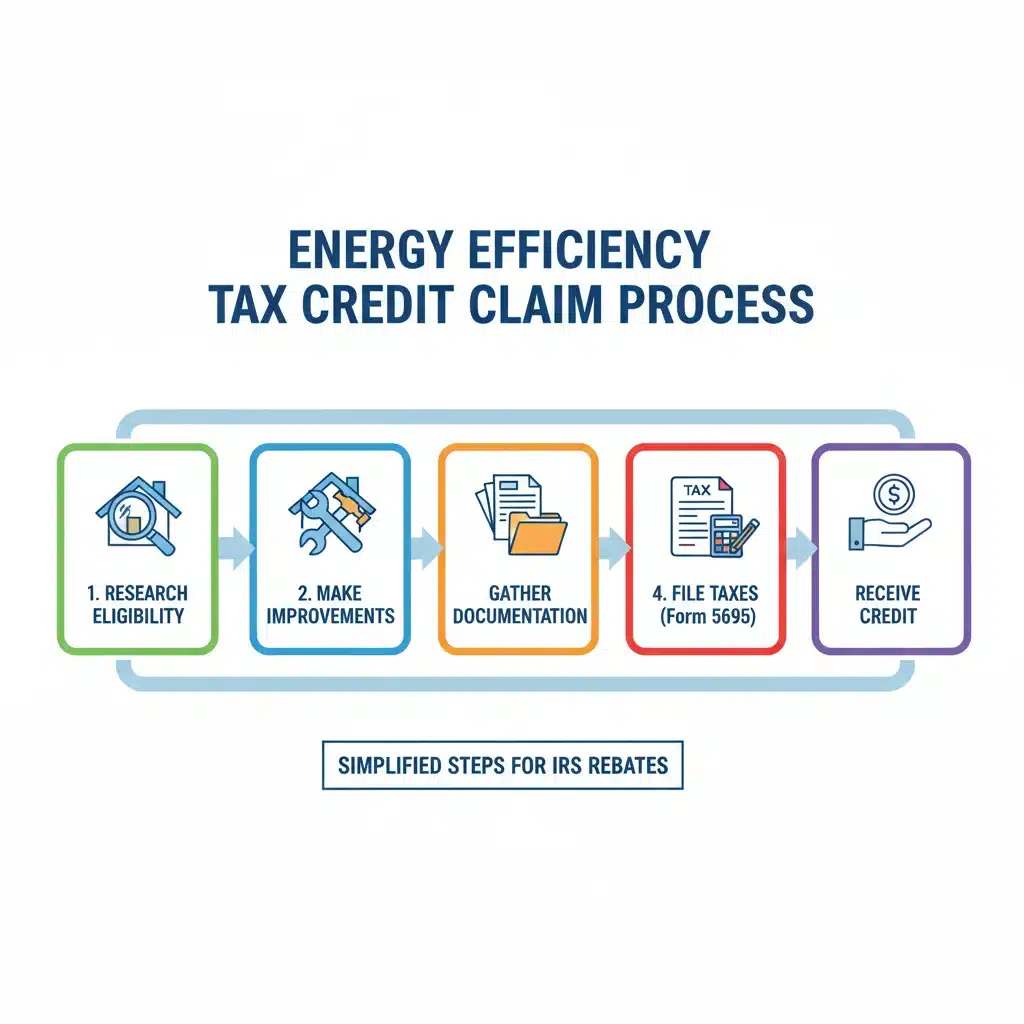
Claiming your IRS Energy Credits 2026 involves a few straightforward steps during tax season. While specific forms might see minor updates, the general process remains consistent:
Step 1: Complete Form 5695, Residential Energy Credits
This is the primary form used to calculate and claim most residential energy credits. You will list your qualifying expenses here. The form is typically divided into sections for the Residential Clean Energy Credit and the Energy Efficient Home Improvement Credit. You will need to input the costs for each type of eligible improvement you made during the tax year.
Step 2: Transfer Credit to Form 1040
Once you’ve calculated your total credit amount on Form 5695, you will transfer this amount to your Form 1040, U.S. Individual Income Tax Return. The specific line number on Form 1040 where this credit is reported may vary by tax year, so always refer to the instructions for the 2026 tax year.
Step 3: File Your Tax Return Electronically or by Mail
You can file your return using tax preparation software, which often guides you through the process of claiming credits, or you can file by mail. If filing by mail, ensure all forms are properly completed and signed. Remember, while you don’t typically attach receipts and invoices to your tax return, you must keep them for your records.
Common Pitfalls to Avoid
Navigating tax credits can sometimes be tricky. Be aware of these common mistakes that could prevent you from claiming your full IRS Energy Credits 2026:
- Not Checking Eligibility: Assuming an improvement qualifies without verifying the specific criteria (e.g., product efficiency ratings, primary residence requirement).
- Poor Record-Keeping: Losing receipts, invoices, or product documentation. This is the most common reason for denied claims during an audit.
- Missing Deadlines: Ensuring your improvements are installed and placed in service within the eligible tax year.
- Confusing Credits with Deductions: Understanding that credits directly reduce tax owed, while deductions reduce taxable income.
- Ignoring Annual/Lifetime Limits: Misunderstanding how limits apply to different types of credits can lead to under-claiming or over-claiming.
- Not Consulting a Professional: For complex situations or significant investments, a tax professional can provide invaluable guidance.
Beyond Federal: State and Local Incentives
While the IRS Energy Credits 2026 offer substantial federal savings, don’t overlook state and local programs. Many states, counties, and even utility companies offer additional rebates, tax credits, or low-interest loans for energy-efficient upgrades. These can often be stacked with federal credits, further reducing your out-of-pocket expenses.
Websites like the Database of State Incentives for Renewables & Efficiency (DSIRE) are excellent resources for finding state-specific programs. Always check what’s available in your area before starting any major home improvement project. Combining federal and local incentives can make otherwise costly upgrades much more affordable, propelling you towards a more sustainable and financially beneficial home.
The Long-Term Benefits of Energy-Efficient Homes
Beyond the immediate financial relief provided by the IRS Energy Credits 2026, investing in energy efficiency offers numerous long-term advantages:
- Reduced Utility Bills: This is perhaps the most tangible benefit. More efficient homes use less energy, leading to lower monthly heating, cooling, and electricity costs.
- Increased Home Value: Energy-efficient features are increasingly attractive to potential buyers, often commanding higher resale values.
- Enhanced Comfort: Better insulation, efficient windows, and modern HVAC systems lead to more consistent indoor temperatures, fewer drafts, and improved air quality.
- Environmental Impact: By reducing your home’s energy consumption, you’re directly contributing to a reduction in greenhouse gas emissions and a cleaner environment.
- Energy Independence: Relying less on traditional energy sources, especially with solar installations, provides a greater sense of energy security.
The IRS Energy Credits 2026 are not just about saving money on taxes; they are an investment in your home, your comfort, and the planet’s future.
Conclusion: Seize Your Opportunity with IRS Energy Credits 2026
The new IRS Energy Credits 2026 present a remarkable opportunity for homeowners to make significant energy-efficient upgrades while receiving substantial financial assistance. With the potential to claim up to $7,500 in rebates, there’s never been a better time to invest in your home’s sustainability and efficiency.
To fully leverage these credits, remember to:
- Understand the specific eligibility requirements for each credit.
- Choose qualifying, certified products and rely on professional installation.
- Maintain meticulous records of all expenses and product details.
- Strategically plan your improvements to maximize cumulative savings.
- Consult IRS guidance and, if necessary, a qualified tax professional.
By taking these steps, you can confidently navigate the process of claiming your IRS Energy Credits 2026, reduce your tax burden, lower your utility bills, and contribute to a more sustainable future. Don’t let this valuable opportunity pass you by – start planning your energy-efficient home improvements today!