Child Tax Credit 2026: Eligibility, Payouts, and Future Outlook

Anúncios
Understanding the Child Tax Credit 2026: A Comprehensive Guide to Eligibility and Payouts
The Child Tax Credit (CTC) has long been a cornerstone of financial support for families across the United States. As we look towards 2026, many parents and guardians are eager to understand what the future holds for this crucial benefit. Will the credit amounts change? Who will be eligible? What steps should families take to ensure they can claim the maximum benefit? This in-depth guide will explore the Child Tax Credit 2026, providing clarity on potential eligibility requirements, anticipated payout structures, and the broader implications for household budgets.
Navigating tax laws can often feel like a complex maze, but understanding key provisions like the Child Tax Credit 2026 is essential for effective financial planning. This article aims to demystify the CTC, offering practical insights and expert analysis to help you prepare for the upcoming tax years. We’ll delve into the historical context of the CTC, examine the current legislative landscape, and project what families can expect in 2026 and beyond.
Anúncios
The Evolution of the Child Tax Credit: A Brief History
To fully grasp the potential shape of the Child Tax Credit 2026, it’s helpful to understand its journey. The CTC was first introduced in 1997 as a $400 non-refundable credit per child. Over the years, it has undergone several significant transformations, most notably with the Tax Cuts and Jobs Act (TCJA) of 2017 and the American Rescue Plan (ARP) of 2021.
- TCJA (2017): This act significantly expanded the CTC, increasing it to $2,000 per qualifying child under age 17. It also made up to $1,400 of the credit refundable, known as the Additional Child Tax Credit (ACTC). The TCJA also introduced a $500 non-refundable credit for other dependents. However, many of these provisions are set to expire at the end of 2025, which brings us to the critical discussion of the Child Tax Credit 2026.
- ARP (2021): The American Rescue Plan temporarily enhanced the CTC for 2021, increasing the maximum credit to $3,600 per child under age 6 and $3,000 per child aged 6-17. Crucially, it made the credit fully refundable and allowed for advance monthly payments. While these changes provided substantial relief to millions of families during the pandemic, they were temporary and have since reverted to the TCJA levels.
The expiration of the TCJA’s enhanced provisions is the primary reason why the Child Tax Credit 2026 is a topic of such keen interest and speculation. Without new legislative action, the CTC will revert to its pre-TCJA structure, which could mean significant changes for many families.
Anticipated Changes for the Child Tax Credit 2026
As things stand, the most significant change for the Child Tax Credit 2026 will be the expiration of the TCJA’s enhancements. This means that, barring any new legislation, the CTC will likely revert to:
- Reduced Credit Amount: The maximum credit per qualifying child would likely decrease from $2,000 to $1,000.
- Age Limit: The age limit for a qualifying child would likely revert from under 17 to under 18.
- Refundability Threshold: The refundable portion (ACTC) would likely revert to a lower amount, and the income threshold for refundability would likely increase. This could mean fewer low-income families would receive the full benefit.
- Phase-out Thresholds: The income levels at which the credit begins to phase out would likely be significantly lower, affecting more middle- and higher-income families.
These potential changes highlight the urgent need for families to stay informed about legislative developments. The political landscape is dynamic, and there is ongoing debate in Congress about extending or modifying the current CTC provisions. Understanding the baseline scenario for the Child Tax Credit 2026 is the first step in preparing for any eventuality.
Eligibility Requirements for the Child Tax Credit 2026
While the exact parameters for the Child Tax Credit 2026 are subject to legislative decisions, certain core eligibility criteria are likely to remain consistent, based on historical precedent and current law. To claim the Child Tax Credit, a child must meet several requirements:
Qualifying Child Criteria:
- Age Test: The child must be under a certain age by the end of the tax year. For 2026, if no new legislation is passed, this will likely revert to under 18 (meaning 17 or younger).
- Relationship Test: The child must be your son, daughter, stepchild, foster child, brother, sister, half-brother, half-sister, stepbrother, stepsister, or a descendant of any of them (e.g., a grandchild).
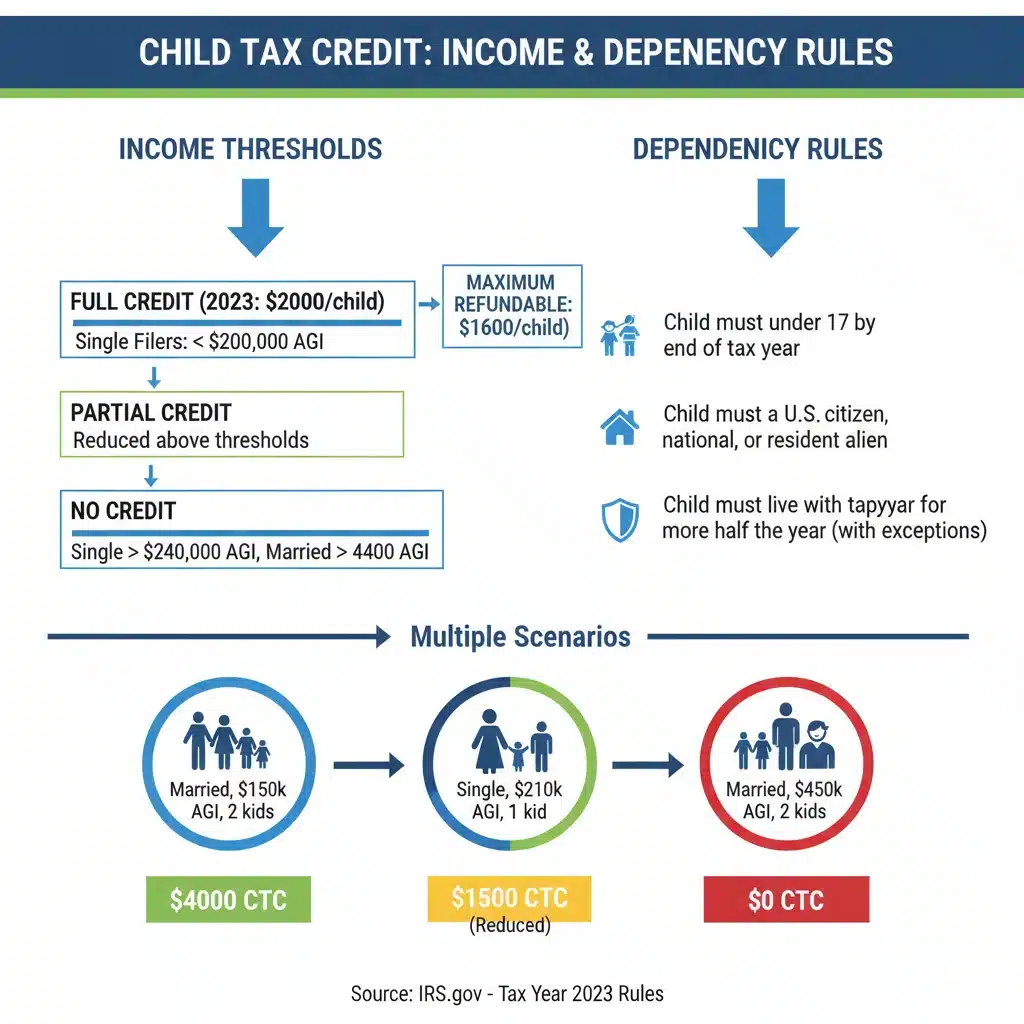
- Residency Test: The child must have lived with you for more than half of the tax year. There are exceptions for temporary absences, such as for school or medical treatment.
- Support Test: The child must not have provided more than half of their own support for the year.
- Joint Return Test: The child cannot file a joint return for the year (unless filed only to claim a refund of withheld income tax or estimated tax paid).
- Citizenship Test: The child must be a U.S. citizen, U.S. national, or U.S. resident alien.
Taxpayer Eligibility:
In addition to the child’s qualifications, the taxpayer claiming the credit must also meet certain criteria, primarily related to income. The Child Tax Credit 2026 will likely have income phase-out thresholds. Under the current law set to expire, the credit begins to phase out for single filers with a Modified Adjusted Gross Income (MAGI) over $200,000 and for married couples filing jointly with a MAGI over $400,000. If the TCJA provisions expire, these phase-out thresholds would likely revert to significantly lower levels, potentially $75,000 for single filers and $110,000 for married couples filing jointly, impacting a broader range of families.
It is crucial for families to accurately assess their income and the eligibility of their dependents to ensure they can claim the Child Tax Credit 2026. Keeping meticulous records and understanding the nuances of these tests will be vital.
Potential Payouts and How They Might Change
The amount of the Child Tax Credit 2026 a family receives is perhaps the most impactful aspect for household budgets. As discussed, without new legislation, the maximum credit is expected to decrease significantly. Let’s break down the potential payout scenarios:
Scenario 1: No Legislative Action (Reversion to Pre-TCJA Law)
If Congress does not act, the Child Tax Credit 2026 would likely revert to:
- Maximum Credit: $1,000 per qualifying child.
- Refundability: The credit would be largely non-refundable. The Additional Child Tax Credit (ACTC) would still exist, allowing some low-income families to receive a portion of the credit as a refund, but the formula would be less generous than under TCJA or ARP. The threshold for refundability would also be higher, meaning more earned income would be required to qualify for the refundable portion.
- Phase-out: The credit would begin to phase out at much lower income levels ($75,000 for single filers, $110,000 for married filing jointly), meaning fewer families would receive the full $1,000 credit.
For a family with two children, this could mean a reduction from a potential $4,000 (under TCJA) to $2,000, or even less if their income falls within the lower phase-out ranges or if they don’t meet the higher refundability thresholds.
Scenario 2: Extension of TCJA Provisions
There is significant political discussion about extending some or all of the TCJA’s enhanced Child Tax Credit provisions. If this were to happen, the Child Tax Credit 2026 could look similar to recent years:
- Maximum Credit: $2,000 per qualifying child.
- Refundability: Up to $1,400 of the credit would be refundable (ACTC), making it more accessible to low-income families.
- Phase-out: Higher income phase-out thresholds ($200,000 for single filers, $400,000 for married filing jointly) would remain in place, benefiting more middle and upper-middle-income families.
Scenario 3: New Enhancements (Less Likely but Possible)
While less probable given the current political climate, some advocates continue to push for a return to the fully refundable, higher-amount Child Tax Credit seen under the American Rescue Plan. If such legislation were to pass, the Child Tax Credit 2026 could offer even greater financial relief, potentially reaching $3,000 or $3,600 per child and being fully refundable to all eligible families, regardless of earned income.
The exact payout for the Child Tax Credit 2026 will depend heavily on the legislative decisions made in late 2025 or early 2026. Families should monitor news from the IRS and legislative bodies closely.
The Economic Impact of the Child Tax Credit 2026
The Child Tax Credit is not just a line item on a tax form; it’s a powerful economic tool that has significant impacts on poverty reduction, family well-being, and local economies. Understanding the potential changes for the Child Tax Credit 2026 means understanding its broader economic implications.
Poverty Reduction:
Studies have consistently shown that an expanded Child Tax Credit is one of the most effective tools for reducing child poverty. The temporary enhancements of the ARP CTC in 2021 lifted millions of children out of poverty. A reversion to a less generous Child Tax Credit 2026 could see a significant increase in child poverty rates, especially among the most vulnerable households.
Stimulating Local Economies:
When families receive additional funds through the CTC, they often spend it on essential needs like food, housing, clothing, and education. This increased consumer spending injects money into local economies, supporting businesses and creating jobs. A diminished Child Tax Credit 2026 could therefore have a dampening effect on economic activity.
Family Well-being:
Beyond economic metrics, the CTC contributes to improved family well-being. It helps parents afford childcare, healthcare, and educational resources, which are critical for child development. The stress of financial insecurity can also be mitigated, leading to better mental and physical health outcomes for both parents and children. The structure of the Child Tax Credit 2026 will directly influence these aspects of family life.
Planning for the Child Tax Credit 2026: What Families Can Do Now
Given the uncertainty surrounding the Child Tax Credit 2026, proactive planning is essential. Here are steps families can take to prepare:
- Stay Informed: Regularly check official sources like the IRS website, reputable financial news outlets, and legislative updates from Congress. Understanding current debates and potential outcomes will help you anticipate changes.
- Maintain Accurate Records: Keep meticulous records of all income, expenses, and dependent information. This includes birth certificates, Social Security numbers, and records of residency for your qualifying children. This will streamline the tax filing process, regardless of the Child Tax Credit 2026 structure.
- Assess Your Eligibility Annually: Even if you qualified for the CTC in previous years, review the eligibility criteria each year. Changes in income, marital status, or a child’s age can affect your eligibility or the amount of credit you receive.
- Consult a Tax Professional: For complex financial situations or if you have specific questions about the Child Tax Credit 2026, consulting a qualified tax advisor is highly recommended. They can provide personalized advice and help you navigate any changes in tax law.
- Adjust Your Budget: If the Child Tax Credit 2026 reverts to a lower amount, it could impact your household budget. Begin to factor in potential changes to your financial planning now, perhaps by building up savings or adjusting discretionary spending.
- Advocate for Families: If you feel strongly about the importance of the Child Tax Credit, consider contacting your elected officials to share your perspective. Public opinion can play a role in legislative decisions.
By taking these steps, families can minimize surprises and ensure they are well-prepared for whatever form the Child Tax Credit 2026 takes.

The Future of Family Tax Benefits Beyond 2026
While the immediate focus is on the Child Tax Credit 2026, it’s also important to consider the long-term trajectory of family tax benefits. The debate over the CTC is part of a larger conversation about supporting families, reducing poverty, and ensuring economic stability for future generations.
Policymakers continue to explore various approaches to family support, including proposals for universal basic income, enhanced childcare subsidies, and other forms of direct financial assistance. The outcomes of the Child Tax Credit 2026 discussions will likely set precedents for future legislative efforts. Families should remain engaged not just with the immediate changes but also with the broader policy discussions that shape the financial landscape for years to come.
Common Questions About the Child Tax Credit 2026
What is the most likely scenario for the Child Tax Credit 2026?
Without new legislative action, the most likely scenario is a reversion to the pre-TCJA Child Tax Credit rules. This would mean a maximum credit of $1,000 per child, lower income phase-out thresholds, and less refundability compared to recent years. However, active discussions in Congress could lead to an extension of some or all of the TCJA’s enhanced provisions.
Will the Child Tax Credit 2026 be fully refundable?
Under a reversion scenario, the Child Tax Credit 2026 would likely not be fully refundable. Only a portion, known as the Additional Child Tax Credit (ACTC), would be refundable, and only for those meeting specific earned income thresholds. The fully refundable nature of the 2021 CTC (under the American Rescue Plan) was temporary and has expired.
How will the age limit for qualifying children change for the Child Tax Credit 2026?
If the TCJA provisions expire, the age limit for a qualifying child for the Child Tax Credit 2026 would likely revert from under 17 to under 18. This means children who are 17 years old at the end of the tax year would again qualify, whereas under the TCJA, they would not.
What income levels will affect the Child Tax Credit 2026?
If the TCJA provisions expire, the income phase-out thresholds for the Child Tax Credit 2026 would likely be significantly lower. For single filers, the credit could begin to phase out at $75,000 MAGI, and for married couples filing jointly, it could begin at $110,000 MAGI. This is a substantial decrease from the $200,000 and $400,000 thresholds under the TCJA.
Where can I find official information about the Child Tax Credit 2026?
The most reliable sources for official information will be the Internal Revenue Service (IRS) website (IRS.gov) and publications from the U.S. Congress. Keep an eye on legislative updates and official announcements as 2025 progresses and approaches 2026.
Conclusion: Preparing for the Child Tax Credit 2026
The Child Tax Credit 2026 represents a critical juncture for millions of American families. While uncertainty remains regarding the final legislative shape of the credit, understanding the baseline scenario of a reversion to pre-TCJA rules is essential. This knowledge empowers families to plan effectively, adjust budgets, and stay informed about policy developments that could significantly impact their financial well-being.
Whether the Child Tax Credit 2026 offers expanded support or reverts to a more modest form, its role in supporting families and reducing child poverty remains undeniable. By staying proactive, maintaining accurate records, and seeking professional advice when needed, families can navigate the evolving tax landscape and ensure they receive the benefits they are entitled to. The discussions around the Child Tax Credit 2026 are not just about tax policy; they are about the future stability and prosperity of American households.