
Disability Benefits 2026: A Step-by-Step Guide to Navigating the Application Process Successfully
Navigating the complex world of disability benefits can be a daunting task, especially when you’re already dealing with health challenges. As we look towards Disability Benefits 2026, it’s crucial to be well-informed about the application process, eligibility requirements, and potential changes. This comprehensive guide aims to demystify the process, providing you with the essential knowledge and strategies to successfully secure the support you need.
For millions of Americans, disability benefits provide a vital safety net, offering financial assistance when a severe medical condition prevents them from working. Whether you’re considering applying for the first time, or you’ve been denied in the past, understanding the intricacies of the system is your first step towards success. We’ll delve into the different types of benefits available, the criteria for eligibility, the documentation you’ll need, and what to expect at each stage of the application and appeal process.
Anúncios
Understanding Disability Benefits 2026: SSI vs. SSDI
Before embarking on your application journey, it’s vital to understand the two main types of federal disability benefits administered by the Social Security Administration (SSA): Social Security Disability Insurance (SSDI) and Supplemental Security Income (SSI). While both programs provide financial aid to individuals who cannot work due to a disability, their eligibility criteria are distinct.
Social Security Disability Insurance (SSDI)
SSDI is designed for individuals who have worked and paid Social Security taxes for a sufficient period. It’s essentially an insurance program, meaning your eligibility is based on your work history and contributions to the Social Security system. To qualify for SSDI, you must have accumulated enough ‘work credits.’ These credits are earned through your employment and the payment of Social Security taxes. The number of credits required varies depending on your age when your disability began, but generally, you need 40 credits, 20 of which must have been earned in the last 10 years ending with the year your disability began.
The amount of your monthly SSDI benefit is based on your average lifetime earnings before your disability. There are no income or asset limits for SSDI, as it’s an earned benefit. However, you cannot be engaging in ‘substantial gainful activity’ (SGA), which means earning above a certain threshold, which is adjusted annually. For Disability Benefits 2026, these thresholds will be updated, so it’s important to check the latest SSA guidelines.
Supplemental Security Income (SSI)
SSI, on the other hand, is a needs-based program for disabled individuals who have limited income and resources, regardless of their work history. This program is funded by general tax revenues, not by Social Security taxes. To qualify for SSI, you must meet strict income and asset limits, which are also adjusted annually. For Disability Benefits 2026, these limits will be subject to change, typically increasing to reflect the cost of living.
SSI recipients often receive Medicaid benefits automatically, which can be a significant advantage. Unlike SSDI, the amount of SSI you receive is not based on your work history but is a standard federal benefit amount, which can be supplemented by state payments in some areas. If you have any other income, your SSI benefit amount will be reduced.
Key Differences and Overlap
It’s possible to qualify for both SSDI and SSI simultaneously, a situation often referred to as ‘concurrent benefits.’ This typically occurs when an individual has some work history but their SSDI benefit amount is very low, making them eligible for supplemental SSI payments to reach a certain minimum. Understanding which program, or combination of programs, you might be eligible for is a critical first step in applying for Disability Benefits 2026.
Defining Disability: The SSA’s Criteria for 2026
The Social Security Administration has a very specific definition of disability, which must be met to qualify for either SSDI or SSI. It’s important to note that this definition is different from that used by other programs, such as workers’ compensation or private insurance. For Disability Benefits 2026, the SSA considers you disabled if:
- You cannot do work that you did before.
- The SSA decides that you cannot adjust to other work because of your medical condition(s).
- Your disability has lasted or is expected to last for at least one year or to result in death.
This is a strict definition. The SSA does not consider partial disability or short-term disability. Your condition must be severe enough to prevent you from engaging in any ‘substantial gainful activity’ (SGA) for a continuous period of at least 12 months. The SSA uses a five-step sequential evaluation process to determine if you meet this definition:
- Are you working? If you are working and your earnings exceed the SGA limit, you generally will not be considered disabled.
- Is your condition severe? Your medical condition(s) must significantly limit your ability to perform basic work activities.
- Is your condition on the List of Impairments? The SSA maintains a ‘Listing of Impairments’ (the Blue Book) that describes medical conditions severe enough to prevent an individual from engaging in any SGA. If your condition meets or is medically equal to a listing, you are considered disabled.
- Can you do the work you did before? If your condition doesn’t meet a listing, the SSA will assess if your ‘residual functional capacity’ (RFC) allows you to perform any of your past relevant work.
- Can you do any other type of work? If you can’t do your past work, the SSA will consider your RFC, age, education, and work experience to determine if you can adjust to any other type of work that exists in significant numbers in the national economy.
Understanding these steps is crucial for preparing your application for Disability Benefits 2026, as it highlights the type of medical evidence and vocational information you’ll need to provide.
Preparing Your Application for Disability Benefits 2026: Essential Documents
The success of your disability application heavily relies on the completeness and accuracy of the information and documentation you provide. Gathering all necessary documents before you apply can significantly streamline the process and prevent delays. Here’s a checklist of what you’ll typically need for your Disability Benefits 2026 application:
Personal and Family Information:
- Your Social Security number.
- Your birth certificate or other proof of birth.
- Proof of U.S. citizenship or lawful alien status (if not born in the U.S.).
- Marriage certificates and divorce decrees (if applicable).
- Information about your children (birth dates, Social Security numbers) if they are applying for benefits based on your disability.
- Bank account information for direct deposit.
Work History Information:
- Names and addresses of all employers for the past 15 years.
- Dates you worked for each employer.
- Amount of earnings for the past year.
- A copy of your W-2 Form (Wage and Tax Statement) and/or self-employment tax returns for the past year.
- Information about any workers’ compensation claims.
Medical Information: (The most critical component)
- Names, addresses, and phone numbers of all doctors, hospitals, clinics, and other medical sources that have treated you for your disabling condition.
- Dates of visits and treatments.
- Names of tests you’ve had and when and where they were performed (e.g., X-rays, MRIs, blood tests).
- Names of all medications you are taking and who prescribed them.
- A detailed description of how your illness, injury, or condition limits your ability to function and perform work-related activities.
It’s important to be as thorough as possible when collecting this information. The more comprehensive and organized your medical records are, the easier it will be for the SSA to make a determination. Consider creating a detailed log of all your medical appointments, treatments, and medications. This systematic approach will be invaluable when applying for Disability Benefits 2026.
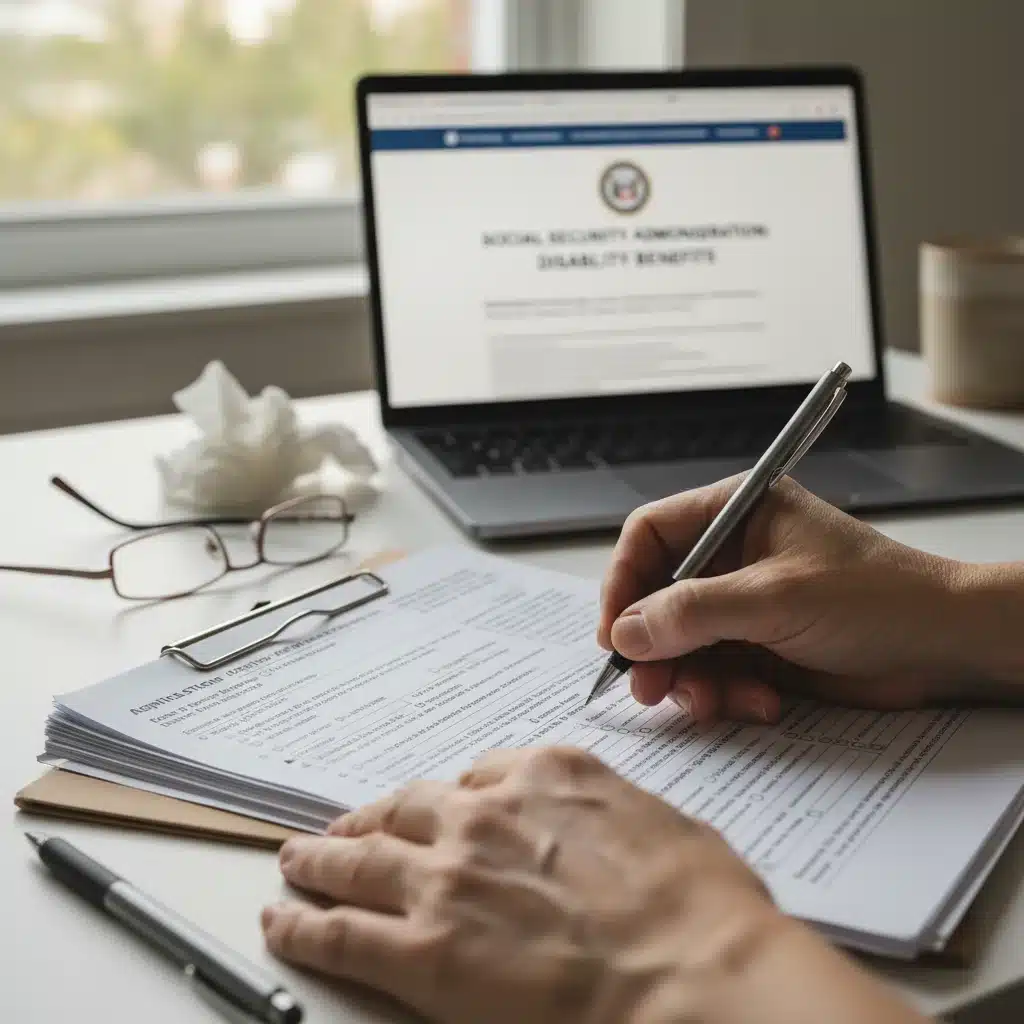
The Application Process for Disability Benefits 2026: A Step-by-Step Guide
Applying for Disability Benefits 2026 involves several steps, and understanding each stage can help you manage expectations and prepare effectively.
Step 1: Initial Application
You can apply for disability benefits online, by phone, or in person at your local Social Security office. The online application is often the most convenient option for many. You’ll need to fill out several forms, including the Application for Disability Benefits and the Adult Disability Report. These forms require detailed information about your medical condition, work history, and daily activities. Be honest and comprehensive in your responses. Any inconsistencies or omissions can lead to delays or denials.
Step 2: Review by Disability Determination Services (DDS)
Once your application is submitted, the SSA sends it to a state agency called Disability Determination Services (DDS). DDS caseworkers, who are state employees, work with medical and psychological consultants to evaluate your claim. They will review all the medical evidence you provided and may contact your doctors for additional information. They might also schedule you for a consultative examination (CE) with an independent doctor to gather more objective medical evidence. It’s crucial to attend any scheduled CEs, as failure to do so can result in a denial.
Step 3: Decision and Notification
After DDS completes its review, they will make a decision on your claim. You will receive a letter informing you whether your application for Disability Benefits 2026 has been approved or denied. If approved, the letter will state your benefit amount and when payments will begin. If denied, the letter will explain the reasons for the denial and outline your appeal rights.
The initial application process can take several months, sometimes even longer than a year, depending on the complexity of your case and the volume of applications. Patience and persistence are key.
Common Reasons for Denial and How to Avoid Them
Many initial applications for Disability Benefits 2026 are denied. Understanding the common pitfalls can help you strengthen your application and increase your chances of approval:
- Insufficient Medical Evidence: This is by far the most common reason for denial. The SSA requires objective medical evidence from acceptable medical sources (doctors, psychologists, hospitals). Vague descriptions of pain or symptoms without supporting medical test results, diagnoses, and treatment plans are often insufficient. Ensure your doctors document your condition thoroughly, including its severity, prognosis, and how it impacts your ability to perform work-related tasks.
- Failure to Follow Treatment: If you are not following prescribed medical treatment without a good reason, the SSA may deny your claim. They expect applicants to make reasonable efforts to improve their condition.
- Engaging in Substantial Gainful Activity (SGA): If you are working and earning above the SGA limit, you will be denied, regardless of your medical condition.
- Lack of Communication: Failing to respond to SSA or DDS requests for information, missing appointments (like consultative examinations), or providing incomplete information can lead to a denial.
- Inconsistent Statements: Providing conflicting information about your symptoms, limitations, or work history can raise red flags and lead to a denial.
To avoid these issues when applying for Disability Benefits 2026, maintain open communication with your doctors, diligently follow their treatment plans, keep meticulous records, and respond promptly to all SSA inquiries.
Appealing a Denied Disability Claim
If your initial application for Disability Benefits 2026 is denied, don’t despair. The appeals process is a crucial part of the system, and many successful claims are initially denied. There are four levels of appeal:
1. Reconsideration
This is the first step in the appeals process. Your claim will be reviewed by a different DDS examiner and medical consultant who were not involved in the initial decision. They will review all the evidence from your first application, along with any new evidence you submit. It’s important to submit any new medical records or updated information that supports your claim during this stage.
2. Hearing by an Administrative Law Judge (ALJ)
If your claim is denied at the reconsideration stage, you can request a hearing before an Administrative Law Judge (ALJ). This is often the most critical stage of the appeals process. At the hearing, you and your representative (if you have one) can present your case directly to the ALJ, explain your medical condition, and answer questions. The ALJ may also question medical and vocational experts. This is where having legal representation can be extremely beneficial.
3. Appeals Council Review
If the ALJ denies your claim, you can request a review by the Social Security Appeals Council. The Appeals Council will review the ALJ’s decision and determine if it was legally sound. They can affirm the decision, remand the case back to an ALJ for further review, or, in rare cases, issue a favorable decision themselves.
4. Federal Court Review
The final stage of appeal is to file a lawsuit in federal district court. This is a complex legal process and typically requires the assistance of an attorney.

The Role of a Disability Attorney or Advocate
While you can apply for and appeal Disability Benefits 2026 on your own, many applicants find the process overwhelming and benefit greatly from the assistance of a qualified disability attorney or advocate. These professionals specialize in Social Security disability law and can:
- Help you understand the SSA’s complex rules and regulations.
- Gather and organize medical evidence effectively.
- Communicate with the SSA and DDS on your behalf.
- Prepare you for hearings and represent you before an ALJ.
- Identify potential weaknesses in your case and help you address them.
- Handle all aspects of the appeals process, from reconsideration to federal court.
Disability attorneys and advocates typically work on a contingency basis, meaning they only get paid if you win your case. Their fees are capped by law and are usually a percentage of your past-due benefits (back pay). This arrangement makes legal representation accessible to most applicants, as you don’t need to pay upfront fees.
Potential Changes and Updates for Disability Benefits 2026
The landscape of Social Security benefits is subject to periodic adjustments and potential legislative changes. While it’s impossible to predict exact modifications for Disability Benefits 2026, here are some areas to keep an eye on:
- Cost-of-Living Adjustments (COLAs): SSDI and SSI benefits typically receive an annual COLA to keep pace with inflation. Expect an announcement regarding the 2026 COLA in late 2025.
- Substantial Gainful Activity (SGA) Limits: The SGA threshold is updated annually. These limits for 2026 will likely see an increase, which can impact who qualifies for benefits.
- Income and Resource Limits for SSI: The federal benefit rate for SSI and its associated income and resource limits are also subject to annual adjustments.
- Legislative Reforms: There are ongoing discussions and proposals regarding potential reforms to the Social Security system. While major overhauls are less common, minor adjustments to eligibility rules or benefit calculations could emerge. Staying informed through official SSA channels and reputable news sources is advisable.
- Technological Advancements in Application Processing: The SSA continuously works to improve its application processing systems. For Disability Benefits 2026, there might be further enhancements to online application tools or digital submission of medical records, potentially streamlining parts of the process.
It’s always recommended to visit the official Social Security Administration website (ssa.gov) for the most current and accurate information regarding any changes that may affect Disability Benefits 2026.
Life After Approval: What to Expect
Receiving approval for Disability Benefits 2026 is a significant milestone, but it’s not the end of the journey. Here’s what you can generally expect:
- Benefit Payments: Once approved, you will start receiving monthly benefit payments. For SSDI, there’s a five-month waiting period before benefits can begin. For SSI, benefits typically start in the month following the approval.
- Back Pay: Depending on when you applied and when your disability began, you may be eligible for ‘back pay’ – benefits for past months you were disabled.
- Medicare and Medicaid: If you receive SSDI, you will generally become eligible for Medicare after a waiting period of 24 months from your entitlement to disability benefits. If you receive SSI, you typically qualify for Medicaid immediately.
- Continuing Disability Reviews (CDRs): The SSA periodically reviews cases to ensure that recipients still meet the medical requirements for disability. The frequency of these reviews depends on the nature of your medical condition and whether it’s expected to improve. It’s crucial to cooperate with these reviews and provide updated medical information.
- Work Incentives: The SSA has various work incentives programs designed to help beneficiaries return to work without immediately losing their benefits. These include the ‘Trial Work Period’ and ‘Extended Period of Eligibility.’ If you are considering returning to work, it’s essential to understand these rules to avoid unexpected loss of benefits.
Managing your benefits and understanding ongoing requirements is just as important as the initial application. The SSA provides resources and information on these topics, and your attorney or advocate can also offer guidance.
Conclusion: Empowering Your Journey to Disability Benefits 2026
Applying for Disability Benefits 2026 can be a challenging and lengthy process, but with the right information and preparation, it is certainly navigable. By understanding the differences between SSDI and SSI, meticulously gathering your medical and work history documentation, and being prepared for the application and appeals stages, you significantly increase your chances of success.
Remember that persistence is key. Many valid claims are initially denied, and the appeals process is designed to provide further review. Don’t hesitate to seek professional help from a disability attorney or advocate, especially if your initial application is denied. Their expertise can be invaluable in presenting a strong case and securing the financial stability you need and deserve.
Stay informed about any updates from the Social Security Administration regarding policies, benefit amounts, and eligibility criteria for Disability Benefits 2026. With careful planning and a proactive approach, you can successfully navigate this journey and obtain the support that allows you to focus on your health and well-being.