Federal Housing Assistance Programs 2026: Your Comprehensive Guide
Anúncios
In an ever-evolving economic landscape, securing stable and affordable housing remains a critical challenge for many individuals and families across the United States. Fortunately, the federal government offers a robust array of Federal Housing Programs designed to provide essential support. As we look towards 2026, understanding these programs, their eligibility requirements, and application processes is more important than ever. This comprehensive guide aims to demystify the various federal housing assistance options, helping you navigate the complexities and identify the best support for your specific needs.
Whether you’re struggling with homelessness, low income, or specific vulnerabilities, there’s likely a program tailored to offer relief. From rental assistance to homeownership opportunities and support for rural communities, the scope of federal intervention is broad. This article will delve into the intricacies of the most prominent Federal Housing Programs, offering insights into how they operate, who they serve, and what steps you need to take to access their benefits. Our goal is to empower you with the knowledge needed to make informed decisions about your housing future.
Anúncios
Understanding the Landscape of Federal Housing Programs
The United States Department of Housing and Urban Development (HUD) is the primary federal agency responsible for administering most Federal Housing Programs. However, other agencies, such as the U.S. Department of Agriculture (USDA), also play a significant role, particularly in rural areas. These programs are not one-size-fits-all; they are designed to address diverse housing needs across different demographics and geographical locations.
The Core Pillars: Rental Assistance Programs
Rental assistance programs form the backbone of federal housing support, primarily aimed at making housing affordable for low-income families, the elderly, and people with disabilities. The most widely recognized of these are Section 8 and Public Housing. Understanding the nuances between these crucial Federal Housing Programs is the first step toward finding the right solution.
Section 8 Housing Choice Voucher Program
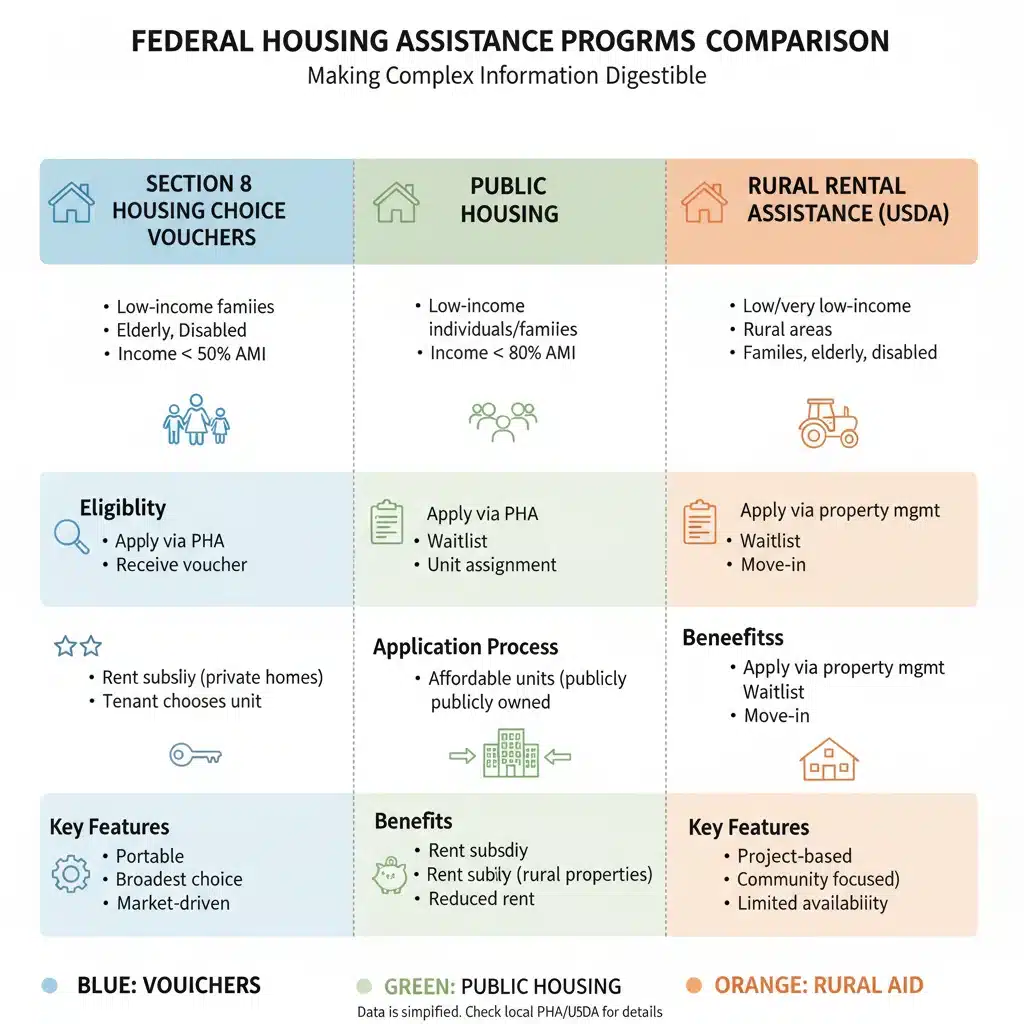
The Housing Choice Voucher Program, commonly known as Section 8, is perhaps the most well-known federal housing initiative. It provides rental subsidies to eligible low-income families, allowing them to choose their own housing, including single-family homes, townhouses, and apartments, in the private market. The voucher covers a portion of the rent, and the family is generally responsible for paying the difference. This program aims to ensure that families do not pay more than 30% of their adjusted gross income for rent and utilities. The flexibility of Section 8 is one of its greatest strengths, as it allows recipients to live in a wider range of neighborhoods and often move without losing their assistance.
Eligibility for Section 8 is primarily based on income, which must not exceed 50% of the median income for the county or metropolitan area in which the family chooses to live. However, 75% of new vouchers issued each year must go to families whose incomes do not exceed 30% of the area median income. Other factors like family size, citizenship status, and criminal background checks are also considered. The demand for Section 8 vouchers often far exceeds availability, leading to long waiting lists that can span several years in many areas. It’s crucial for applicants to apply to multiple Public Housing Agencies (PHAs) if possible and to keep their contact information updated.
Public Housing Program
Unlike Section 8, where tenants find housing in the private market, the Public Housing Program involves housing units owned and managed by local Public Housing Agencies (PHAs). These PHAs provide affordable rental housing for low-income families, the elderly, and people with disabilities. The rent in public housing is typically set at 30% of the family’s adjusted monthly income.
Public housing developments vary widely in size and style, from scattered single-family houses to high-rise apartments. While it offers direct, affordable housing, the availability of public housing units is also limited, and waiting lists are common. The application process involves contacting your local PHA, completing an application, and providing necessary documentation for income and family composition verification. Both Section 8 and Public Housing are vital Federal Housing Programs that address immediate housing affordability crises.
Beyond Rental Assistance: Other Key Federal Housing Programs
While rental assistance programs are prominent, several other Federal Housing Programs cater to specific needs and demographics, offering diverse forms of support.
USDA Rural Development Housing Programs
For individuals and families residing in rural areas, the U.S. Department of Agriculture (USDA) offers a suite of housing programs under its Rural Development initiative. These programs are crucial for promoting economic development and improving the quality of life in rural communities. The main programs include:
- Single Family Housing Direct Home Loans (Section 502 Direct Loans): This program helps low and very low-income individuals and families purchase decent, safe, and sanitary homes in eligible rural areas. The loans are direct from the USDA and offer subsidized interest rates, making homeownership accessible to those who might not qualify for conventional mortgages.
- Single Family Housing Guaranteed Loan Program (Section 502 Guaranteed Loans): This program assists moderate-income households in obtaining safe and sanitary housing in eligible rural areas by guaranteeing loans made by private lenders. This reduces the risk for lenders, making homeownership more attainable for qualified borrowers.
- Home Repair and Rehabilitation Loans and Grants (Section 504): These programs provide loans to very low-income homeowners to repair, improve, or modernize their homes. Grants are also available for elderly very low-income homeowners to remove health and safety hazards.
- Multi-Family Housing Programs: These programs provide financing for the development and preservation of affordable rental housing for low-income individuals and families in rural areas.
The USDA Federal Housing Programs are specifically designed to address the unique challenges of rural housing markets, where access to conventional financing and affordable housing options can be limited.
Housing Opportunities for Persons With AIDS (HOPWA)
The HOPWA program is the only federal program dedicated to addressing the housing needs of people living with HIV/AIDS and their families. It provides housing assistance and supportive services to help clients maintain stable housing, improve access to healthcare, and reduce the risk of homelessness. HOPWA funds are distributed to states and local governments, as well as to non-profit organizations, to provide a range of services, including tenant-based rental assistance, short-term rent, mortgage, and utility assistance, and facility-based housing.
HOME Investment Partnerships Program
The HOME program provides grants to states and local governments to create affordable housing for low-income households. This flexible program allows participating jurisdictions to fund a wide range of activities, including building, buying, and rehabilitating affordable housing for rent or homeownership, or providing direct rental assistance to tenants. HOME is often used in conjunction with other Federal Housing Programs to maximize impact and leverage resources for comprehensive community development.
Emergency Solutions Grants (ESG) Program
The ESG program provides funding to states, localities, and tribes to address homelessness. It supports a variety of services, including street outreach, emergency shelters, homelessness prevention, and rapid re-housing. The goal of ESG is to help individuals and families quickly regain stability in permanent housing after experiencing a housing crisis or homelessness. This program is a critical component of the federal strategy to end homelessness.
Eligibility and Application Process for Federal Housing Programs
While each Federal Housing Program has its specific requirements, there are common threads in eligibility and the application process. Understanding these general guidelines can help streamline your search for assistance.
General Eligibility Criteria
- Income Limits: Most federal housing programs are income-based, targeting low to moderate-income individuals and families. Income limits vary by program, family size, and geographical location (often based on Area Median Income, AMI).
- Family Status: Some programs prioritize specific populations, such as the elderly, people with disabilities, families with children, or veterans.
- Citizenship/Immigration Status: Applicants typically need to be U.S. citizens or have eligible immigration status.
- Criminal Background: A criminal background check is often part of the application process, and certain convictions (e.g., drug-related offenses, violent crimes) may disqualify applicants.
- Housing Status: Some programs require applicants to be experiencing homelessness or at risk of homelessness.
Navigating the Application Process
The application process for Federal Housing Programs can be lengthy and requires meticulous attention to detail. Here’s a general overview:
- Identify the Right Program: Based on your income, family situation, and location, determine which programs you might be eligible for. The HUD website and local housing authorities are excellent resources.
- Locate Your Local Administering Agency: For most programs, you’ll apply through a local Public Housing Agency (PHA) for Section 8 and Public Housing, or through USDA Rural Development offices for their programs.
- Gather Required Documentation: Be prepared to provide extensive documentation, including proof of income (pay stubs, tax returns), identification (birth certificates, social security cards), proof of family size, and any relevant disability or veteran status documentation.
- Complete the Application: Fill out all application forms accurately and completely. Incomplete applications can lead to significant delays.
- Attend Interviews/Appointments: You may be required to attend interviews or appointments to verify information and discuss your housing needs.
- Understand Waiting Lists: Many programs, especially Section 8 and Public Housing, have long waiting lists. It’s crucial to understand how to maintain your position on the list, which often involves updating your contact information and responding to periodic check-ins.
- Be Patient: The process can take time. Persistence and thoroughness are key.
Tips for a Successful Application
- Be Honest and Accurate: Provide truthful and accurate information on all forms. Misrepresentation can lead to disqualification.
- Keep Copies: Make copies of all documents you submit and keep a record of all correspondence.
- Stay Organized: Create a dedicated folder for all your housing assistance documents.
- Follow Up: Periodically check on the status of your application, especially if you’re on a waiting list.
- Seek Assistance: If you find the process overwhelming, consider reaching out to local housing counseling agencies, legal aid services, or non-profit organizations that specialize in housing assistance. They can provide guidance and support.

Recent Trends and Future Outlook for Federal Housing Programs in 2026
As we approach 2026, the landscape of Federal Housing Programs continues to evolve. Several key trends and considerations are shaping the future of housing assistance in the United States.
Increased Focus on Homelessness Prevention and Rapid Re-housing
There’s a growing emphasis on preventing homelessness before it occurs and rapidly re-housing individuals and families who do experience it. Programs like ESG are receiving increased attention and funding, reflecting a national strategy to move away from managing homelessness to actively ending it. This involves providing more robust support for eviction prevention, short-term rental assistance, and connecting individuals with resources to maintain stable housing.
Addressing Housing Affordability Crisis
The ongoing housing affordability crisis, driven by rising housing costs and stagnant wages in many areas, continues to put pressure on existing Federal Housing Programs. Policy discussions often revolve around increasing funding for programs like Section 8 and HOME to expand their reach and reduce extensive waiting lists. There’s also a push for innovative solutions, such as incentivizing the development of more affordable housing units and exploring new financing mechanisms.
Leveraging Technology for Efficiency
PHAs and other administering agencies are increasingly exploring how technology can streamline the application process, improve program administration, and enhance communication with applicants and participants. Online application portals, digital document submission, and automated notification systems are becoming more common, aiming to make federal housing assistance more accessible and efficient.
Support for Vulnerable Populations
Dedicated programs like HOPWA continue to be vital, and there’s a broader recognition of the specific housing needs of other vulnerable populations, including veterans, individuals with chronic illnesses, and those re-entering society after incarceration. Future policy efforts are likely to focus on tailoring assistance to these groups and integrating housing support with other essential services like healthcare and employment assistance.
Climate Change and Housing Resilience
With the increasing frequency of extreme weather events, there’s a growing awareness of the need for resilient and sustainable affordable housing. Future Federal Housing Programs may incorporate more incentives for energy-efficient construction, climate-resilient building practices, and disaster preparedness in affordable housing developments. This not only protects residents but also contributes to broader environmental goals.
Conclusion: Your Path to Stable Housing with Federal Housing Programs
Navigating the complex world of Federal Housing Programs can seem daunting, but with the right information and a clear understanding of your options, it’s a journey that can lead to stable and affordable housing. From the widespread reach of Section 8 and Public Housing to the targeted support of USDA Rural Development and HOPWA, the federal government offers a diverse portfolio of assistance designed to meet a wide array of needs.
As you consider your housing future in 2026 and beyond, remember to thoroughly research each program, understand its specific eligibility criteria, and meticulously prepare your application. Don’t hesitate to seek guidance from local housing authorities, non-profit organizations, or housing counseling agencies. These resources are invaluable in helping you navigate the process and maximize your chances of securing the support you need.
Ultimately, Federal Housing Programs are more than just financial aid; they are lifelines that provide security, stability, and the foundation upon which individuals and families can build better lives. By empowering yourself with knowledge and proactively pursuing available assistance, you can take a significant step towards achieving your housing goals and securing a brighter future.