Maximize Your Federal Pell Grant for 2026: Up to $7,395 for Education

Anúncios
Understanding the Federal Pell Grant Max Award for 2026: Your Path to Affordable Education
Embarking on a higher education journey is an exciting, yet often daunting, prospect, especially when considering the financial implications. For many students, the dream of a college degree can seem out of reach due to escalating tuition costs. Fortunately, the Federal Pell Grant program stands as a beacon of hope, providing crucial financial assistance to millions of eligible students. As we look towards the 2026 academic year, understanding the Pell Grant Max Award and how to secure it is more important than ever.
This comprehensive guide will delve into everything you need to know about the Federal Pell Grant for 2026, focusing on how you can potentially secure the maximum award of up to $7,395. We’ll explore eligibility criteria, the ins and outs of the Free Application for Federal Student Aid (FAFSA), strategies for maximizing your award, and essential tips to navigate the financial aid landscape. Our goal is to empower you with the knowledge to make informed decisions and ensure that financial barriers do not stand in the way of your educational aspirations.
Anúncios
What is the Federal Pell Grant?
The Federal Pell Grant is a need-based federal grant awarded to undergraduate students who display exceptional financial need and have not earned a bachelor’s or professional degree. Unlike loans, a grant does not have to be repaid, making it an incredibly valuable resource for students seeking to fund their education.
The program is administered by the U.S. Department of Education, and the amount a student receives is determined by several factors, including their Expected Family Contribution (EFC) – now replaced by the Student Aid Index (SAI) under the FAFSA Simplification Act – the cost of attendance at their chosen institution, their enrollment status (full-time or part-time), and the length of their academic program. The Pell Grant Max Award represents the highest amount an eligible student can receive in a given award year.
Historical Context and Significance
Established in 1972, the Pell Grant program has been instrumental in making higher education accessible to millions of low- and middle-income students. Over the decades, it has evolved to address changing educational costs and economic realities. Its significance cannot be overstated; for many, the Pell Grant is the difference between attending college and forgoing higher education altogether. It helps reduce the need for student loans, thereby lessening the financial burden on graduates.
Understanding the Pell Grant Max Award for 2026
For the 2024-2025 academic year, the maximum Pell Grant award is $7,395. While the exact figure for the 2026-2027 academic year will be officially determined closer to the date by Congress and the Department of Education, it is widely anticipated to remain at or near this level, potentially increasing slightly due to inflation and legislative adjustments. The Pell Grant Max Award is a critical benchmark for students planning their college finances.
Factors Determining Your Pell Grant Amount
Several key factors influence the Pell Grant amount you receive, including the potential to reach the maximum:
- Student Aid Index (SAI): This is the most crucial factor. The SAI is a number calculated from the information you provide on your FAFSA. It represents an eligibility index, not the amount of money your family can or will pay for college. A lower SAI generally indicates greater financial need and a higher potential Pell Grant award. Students with an SAI of 0 (or negative) are typically eligible for the maximum Pell Grant.
- Cost of Attendance (COA): This is the total amount it will cost to attend a particular school for one academic year. It includes tuition and fees, room and board, books and supplies, transportation, and personal expenses.
- Enrollment Status: Your award amount will be adjusted based on whether you are enrolled full-time, three-quarter time, half-time, or less than half-time. Full-time enrollment typically qualifies you for the full Pell Grant amount, assuming other criteria are met.
- Length of Academic Program: The Pell Grant is typically awarded for one academic year. If your program is shorter or longer than the standard academic year, your award may be prorated.
Eligibility Requirements for the Federal Pell Grant
To be considered for a Federal Pell Grant, you must meet several general eligibility requirements:
- Be an undergraduate student enrolled in a degree or certificate program.
- Be a U.S. citizen or an eligible non-citizen.
- Have a valid Social Security number (with some exceptions).
- Be registered with Selective Service (if you are a male between 18 and 25 years old).
- Maintain satisfactory academic progress (SAP) as defined by your school.
- Not be in default on any federal student loans or owe a refund on any federal student grants.
- Demonstrate financial need, as determined by your FAFSA information and resulting SAI.
- Not have a bachelor’s degree or professional degree. (In some cases, students enrolled in post-baccalaureate teacher certification programs may be eligible).
Meeting these criteria is the first step toward securing any Pell Grant, and critically, the Pell Grant Max Award.
The FAFSA: Your Gateway to the Pell Grant Max Award
The Free Application for Federal Student Aid (FAFSA) is the single most important document for determining your eligibility for federal financial aid, including the Pell Grant. The FAFSA for the 2026-2027 academic year will likely open on October 1, 2025, though recent changes under the FAFSA Simplification Act have shifted timelines, so always check the official Federal Student Aid website for the most current information.
Key Changes with FAFSA Simplification
The FAFSA Simplification Act brought significant changes to the application process, aiming to make it easier for students to apply for and receive federal financial aid. These changes include:
- Replaced EFC with SAI: The Expected Family Contribution (EFC) has been replaced by the Student Aid Index (SAI). The new calculation often results in a lower index for many students, potentially increasing eligibility for need-based aid like the Pell Grant.
- Fewer Questions: The FAFSA form has been streamlined with fewer questions, making it quicker and less confusing to complete.
- Direct Data Exchange with IRS: The FAFSA now uses a direct data exchange with the IRS, which means most applicants (and their parents, if applicable) will no longer manually enter tax information. This is mandatory for federal student aid eligibility and helps prevent errors.
- Expanded Eligibility for Max Pell Grant: The new SAI calculation and other changes are designed to expand eligibility for the maximum Pell Grant to more students.
Understanding these changes is vital for accurately completing your FAFSA and maximizing your chances of receiving the Pell Grant Max Award.

Tips for Completing the FAFSA Accurately and On Time
- Gather Necessary Documents: Before starting the FAFSA, collect all required documents, including your Social Security number, tax returns (for yourself and your parents, if dependent), records of untaxed income, and information on cash, savings, and checking account balances.
- Create an FSA ID: Both you and one of your parents (if you are a dependent student) will need an FSA ID to access and sign the FAFSA electronically. Create these well in advance.
- File Early: While the federal deadline is usually much later, many states and individual colleges have their own financial aid deadlines. Filing as soon as the FAFSA opens (typically October 1st for the following academic year) gives you the best chance to receive all available aid, including the Pell Grant Max Award.
- Use the IRS Direct Data Exchange: This feature simplifies the process and reduces errors by directly importing your tax information. Ensure you consent to the data exchange.
- Review Carefully: Double-check all information before submitting. Even small errors can delay your application or affect your eligibility.
- List All Schools: List all schools you are considering, even if you haven’t been accepted yet. You can list up to 20 schools online.
Strategies to Maximize Your Pell Grant Award
While the Pell Grant is primarily need-based, there are actions you can take to ensure you receive the highest possible award:
1. Understand and Optimize Your SAI
Your Student Aid Index (SAI) is the primary determinant of your Pell Grant eligibility and amount. A lower SAI indicates greater financial need. While you shouldn’t manipulate your finances solely for financial aid purposes, understanding how your assets and income are assessed can be beneficial:
- Income is Key: The FAFSA primarily looks at income from the “prior-prior year.” For the 2026-2027 FAFSA, this would be your (and your parents’) income from 2024. If there have been significant changes in income (e.g., job loss, divorce, death of a parent), you can appeal to your financial aid office.
- Assets: Certain assets are counted in the SAI calculation (e.g., savings accounts, investments), while others are not (e.g., primary home equity, retirement accounts). Strategically saving in tax-advantaged retirement accounts can sometimes lower your SAI.
- Dependency Status: Your dependency status heavily influences whose financial information is reported. If you can establish independent student status, only your income and assets (and your spouse’s, if applicable) will be considered, which can often result in a lower SAI.
2. Choose an Affordable School (Lower COA)
While the Pell Grant amount is capped, the actual “need” is determined by subtracting your SAI from the school’s Cost of Attendance (COA). Attending a school with a lower COA can mean that the Pell Grant covers a larger percentage of your overall costs, effectively maximizing its impact. However, your Pell Grant award itself is not directly tied to the COA in terms of its maximum value. The Pell Grant Max Award is a fixed amount for eligible students, but its purchasing power varies with COA.
3. Maintain Full-Time Enrollment
To receive the full Pell Grant Max Award, you typically need to be enrolled full-time. If you enroll part-time, your Pell Grant will be prorated based on your enrollment intensity. While part-time enrollment might be necessary for some, be aware that it will reduce your grant amount.
4. Satisfactory Academic Progress (SAP)
You must maintain satisfactory academic progress (SAP) to continue receiving federal financial aid, including the Pell Grant. Each school defines SAP differently, but it generally involves maintaining a minimum GPA, completing a certain percentage of attempted credits, and completing your degree within a maximum timeframe. Failing to meet SAP can lead to the loss of your Pell Grant.
5. Don’t Exceed Lifetime Eligibility
There is a lifetime limit on the amount of Pell Grant funding you can receive. This limit is currently 600% of the annual Pell Grant Max Award, which translates to roughly six years of full-time Pell Grant eligibility. You can track your Pell Grant Lifetime Eligibility Used (LEU) on the Federal Student Aid website. Be mindful of this limit, especially if you plan to change majors, transfer schools, or take longer to complete your degree.
Beyond the Pell Grant: Other Financial Aid Options
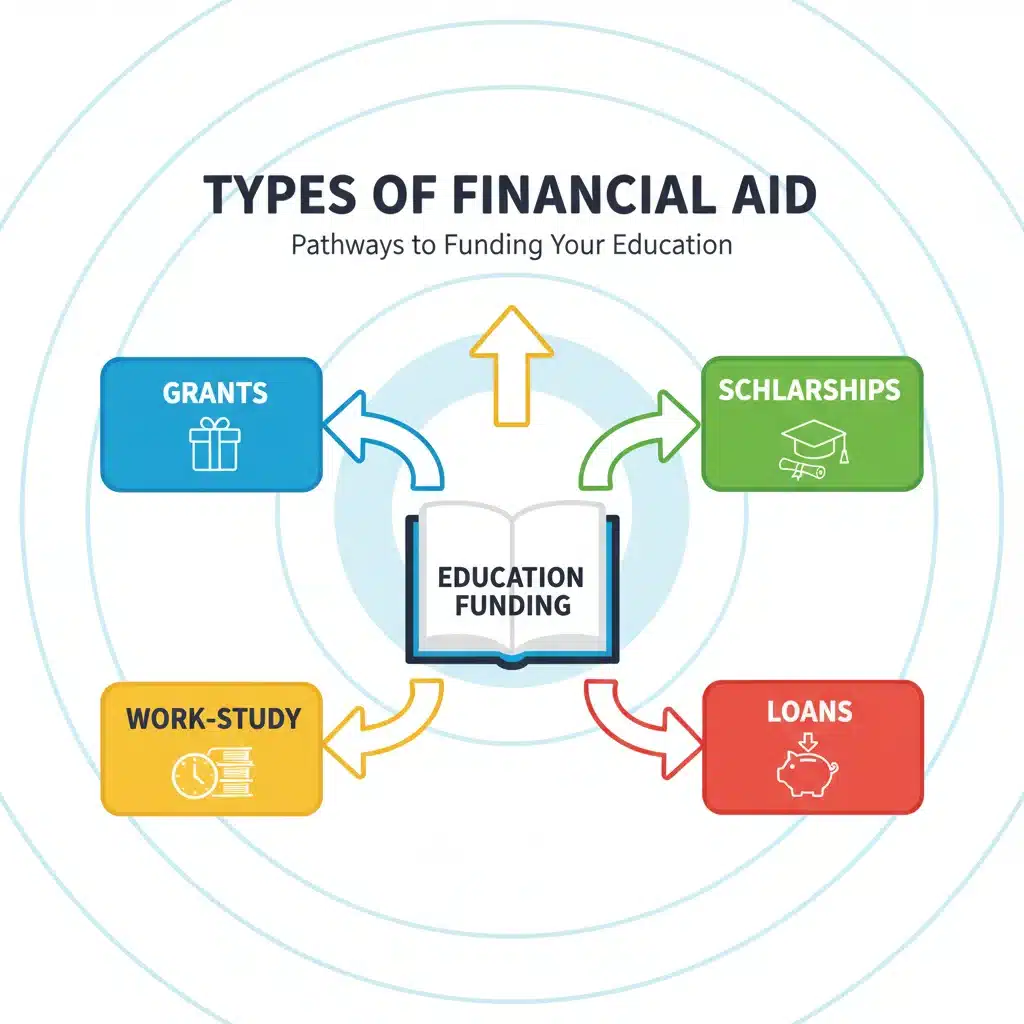
While the Pell Grant is a cornerstone of federal student aid, it’s crucial to explore all available options to cover your educational costs. Even if you receive the Pell Grant Max Award, it may not cover all expenses.
1. Other Federal Grants
- Federal Supplemental Educational Opportunity Grant (FSEOG): For students with exceptional financial need. Funds are limited and distributed by schools.
- Teacher Education Assistance for College and Higher Education (TEACH) Grant: For students who agree to teach in high-need fields in low-income schools for at least four years.
- Iraq and Afghanistan Service Grant: For students whose parent or guardian died as a result of military service in Iraq or Afghanistan after 9/11.
2. Scholarships
Scholarships are “free money” that do not need to be repaid. They can be merit-based, need-based, or based on specific criteria (e.g., academic achievement, extracurricular activities, ethnicity, major, hometown). Start your scholarship search early and apply to as many as possible.
- Institutional Scholarships: Many colleges offer their own scholarships.
- Private Scholarships: Search online databases (e.g., Fastweb, Scholarship.com, College Board), local community organizations, and your high school guidance counselor’s office.
3. Work-Study Programs
Federal Work-Study provides part-time jobs for undergraduate and graduate students with financial need, allowing them to earn money to help pay for educational expenses. These jobs are often on campus or at non-profit organizations and are designed to accommodate your academic schedule.
4. Federal Student Loans
If grants and scholarships aren’t enough, federal student loans offer low fixed interest rates and flexible repayment options. Always exhaust grant and scholarship opportunities before considering loans. Federal loans include:
- Direct Subsidized Loans: For undergraduate students with demonstrated financial need. The government pays the interest while you’re in school at least half-time and during deferment periods.
- Direct Unsubsidized Loans: Available to undergraduate and graduate students regardless of financial need. Interest accrues while you’re in school.
- Direct PLUS Loans: For graduate or professional students and parents of dependent undergraduate students.
5. State and Institutional Aid
Many states and individual colleges offer their own financial aid programs. Be sure to check with your state’s higher education agency and the financial aid office of each school you apply to for specific deadlines and application procedures.
Appealing Your Financial Aid Offer
If your financial circumstances have changed significantly since you filed your FAFSA (e.g., job loss, medical emergencies, divorce, death of a parent), or if you believe your initial financial aid offer doesn’t accurately reflect your family’s ability to pay, you can appeal to your school’s financial aid office. This is known as a “special circumstances” appeal or “professional judgment.” Provide clear documentation to support your case, and the financial aid office may adjust your SAI, potentially increasing your eligibility for the Pell Grant Max Award or other need-based aid.
The Future of the Pell Grant
The Pell Grant program continues to be a cornerstone of federal student aid, with ongoing discussions and legislative efforts aimed at strengthening its impact. Future changes could include further increases to the maximum award, adjustments to eligibility criteria, or modifications to the FAFSA process. Staying informed through official government sources like StudentAid.gov is crucial for planning your educational finances.
Conclusion: Securing Your Educational Future with the Pell Grant
The Federal Pell Grant program offers an invaluable opportunity for millions of students to pursue higher education without being overwhelmed by costs. By understanding the eligibility requirements, diligently completing the FAFSA, and employing smart financial aid strategies, you can significantly increase your chances of securing the Pell Grant Max Award for 2026, potentially up to $7,395, and paving the way for a brighter academic future.
Remember, the journey to an affordable education is a proactive one. Start early, gather all necessary information, and don’t hesitate to reach out to financial aid professionals at your prospective schools. Your commitment to understanding and navigating the financial aid process can unlock the resources you need to achieve your educational dreams.