2026 Scholarship Deadlines: Secure Your U.S. Education Funding Now
Navigating the path to higher education in the United States is an exciting, yet often daunting, prospect. For many aspiring students, both domestic and international, financial aid is a critical component of making this dream a reality. Scholarships play an indispensable role in offsetting the rising costs of tuition, housing, and living expenses. However, securing these coveted awards hinges on one crucial factor: understanding and adhering to the 2026 scholarship deadlines. Missing a deadline, even by an hour, can mean losing out on significant funding opportunities. This comprehensive guide is designed to equip you with the knowledge and strategies needed to successfully manage your scholarship applications for the 2026 academic year, ensuring you don’t miss a single opportunity to fund your U.S. education.
The Importance of Early Planning: Why 2026 Scholarship Deadlines Matter Now
While 2026 may seem a distant future, the reality of scholarship applications dictates that preparation must begin well in advance. Many prestigious scholarships, especially those offered by universities or large foundations, have application windows that open in the fall of 2025 and close early in 2026. This extended timeline is designed to allow applicants ample time to gather necessary documents, write compelling essays, secure letters of recommendation, and complete rigorous application forms. Procrastination is the enemy of scholarship success, particularly when it comes to the competitive landscape of U.S. education funding.
Understanding the typical scholarship cycle is paramount. Generally, scholarships for the academic year beginning in Fall 2026 will have deadlines predominantly falling between October 2025 and March 2026. However, some early bird scholarships, particularly those tied to early admission applications for specific universities, might even have deadlines in September 2025. Conversely, a smaller number of scholarships might extend into spring or even summer 2026, though these are often for less competitive awards or specific niche fields. Therefore, a proactive approach to monitoring 2026 scholarship deadlines is not just recommended, it’s essential.
Early planning also provides significant advantages beyond simply meeting deadlines. It allows you to:
- Refine your essays: Good essays require multiple drafts, feedback, and careful editing. Rushing this process often leads to generic or unpolished submissions.
- Secure strong recommendations: Professors, counselors, and employers are busy individuals. Giving them ample notice to write thoughtful and personalized recommendation letters is crucial.
- Gather all required documents: Transcripts, standardized test scores (SAT/ACT, TOEFL/IELTS), financial statements, and portfolios can take time to procure.
- Identify more opportunities: The more time you dedicate to searching, the more scholarships you are likely to discover that align with your profile and aspirations.
- Reduce stress: A well-organized application process minimizes last-minute panic and allows you to present your best self.
Key Phases for 2026 Scholarship Applications: A Timeline Breakdown
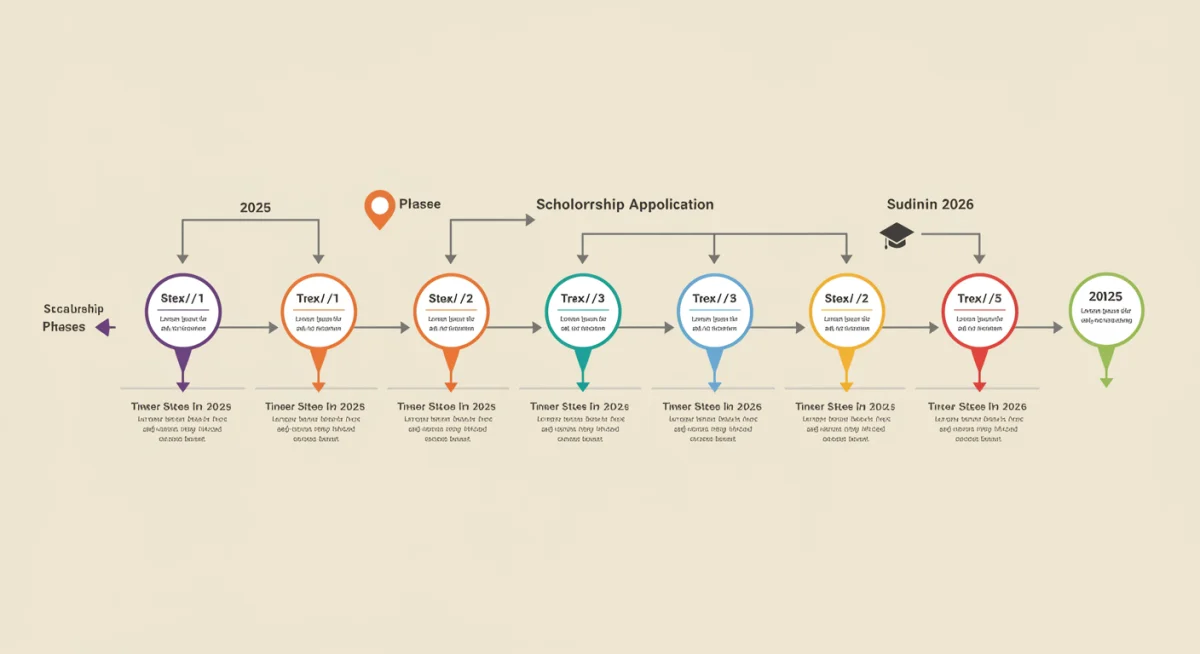
To effectively manage the myriad of 2026 scholarship deadlines, it’s helpful to break down the application process into distinct phases. While specific dates will vary by scholarship, this general timeline provides a roadmap for your journey.
Phase 1: Research and Preparation (Spring/Summer 2025)
This is arguably the most critical phase, laying the groundwork for all subsequent steps. During this period, your focus should be on identifying potential scholarships and understanding their requirements.
- Identify your eligibility: Start by understanding what makes you a strong candidate. Are you a high school senior, a college student, or a graduate school applicant? What is your field of study? What are your academic achievements, extracurricular activities, and community service involvement?
- Explore scholarship databases: Utilize reputable online scholarship search engines (e.g., Fastweb, Scholarship.com, College Board’s Scholarship Search, Niche, Chegg). Filter by your criteria, including academic merit, financial need, ethnicity, gender, field of study, and geographic location.
- University-specific scholarships: If you have target universities in mind, thoroughly research their financial aid pages. Many institutions offer their own scholarships, often tied to your admission application. Pay close attention to their specific 2026 scholarship deadlines, as these can differ from general admission dates.
- Local and community scholarships: Don’t overlook opportunities in your local community, through your high school, local businesses, religious organizations, or civic groups. These often have less competition.
- Create a master list: As you find potential scholarships, create a detailed spreadsheet. Include the scholarship name, awarding organization, eligibility criteria, required documents, essay prompts, and most importantly, the application deadline. This will be your central tool for tracking 2026 scholarship deadlines.
- Request transcripts and test scores: Understand the process for obtaining official transcripts from your current and previous educational institutions. If standardized tests are required, ensure your scores are recent and meet the scholarship’s criteria. Plan to retake tests if necessary.
Phase 2: Application Writing and Gathering (Fall 2025)
As the academic year kicks off, so does the intensive period of application completion. This is when many of the significant 2026 scholarship deadlines begin to loom.
- Start writing essays: Many scholarships require essays. Begin brainstorming topics, outlining your responses, and drafting your essays. Tailor each essay to the specific scholarship’s prompt and values. Generic essays rarely impress. Focus on showcasing your unique experiences, passions, and future goals.
- Solicit recommendation letters: Reach out to teachers, counselors, mentors, or employers who know you well and can speak to your strengths. Provide them with a clear deadline, your resume, a list of your achievements, and information about the scholarships you’re applying for. Give them at least 2-4 weeks’ notice.
- Assemble your portfolio (if applicable): For arts, music, or specific technical fields, a portfolio might be required. Start curating your best work well in advance.
- Complete financial aid forms: For need-based scholarships, you will likely need to complete the Free Application for Federal Student Aid (FAFSA) or the CSS Profile. These forms typically open in October for the following academic year. Completing them accurately and promptly is crucial, as some scholarships use this information to determine eligibility. Be aware of the FAFSA 2026 scholarship deadlines for federal aid, as these can indirectly impact institutional scholarship eligibility.
- Review and revise: Before submitting anything, meticulously review all application materials for errors, typos, and completeness. Ask a trusted friend, family member, or mentor to proofread your essays.

Phase 3: Submission and Follow-up (Late Fall 2025 – Early Spring 2026)
This is the crunch time when most 2026 scholarship deadlines will hit. Timely submission is non-negotiable.
- Submit applications well before the deadline: Do not wait until the last minute. Technical glitches, internet issues, or website overloads can prevent your submission. Aim to submit at least a few days before the official deadline.
- Confirm submission: Most online platforms will send a confirmation email. If not, check your application portal to ensure everything was received correctly.
- Track your applications: Update your master list with submission dates and any tracking numbers.
- Follow up on recommendations: Politely check in with your recommenders a week or two before the deadline to ensure they have submitted their letters.
- Prepare for interviews (if required): Some competitive scholarships may require an interview. Research common interview questions and practice your responses.
- Monitor your email: Scholarship organizations will typically communicate decisions via email. Check your spam folder regularly.
Critical Deadlines to Mark on Your Calendar for 2026 Scholarships
While every scholarship has its unique timeline, there are general periods when the majority of 2026 scholarship deadlines will occur. Understanding these peaks can help you prioritize and manage your workload.
Early Bird Deadlines (September – November 2025)
These are often associated with highly competitive scholarships, institutional aid for early admission applicants, or specialized programs. Missing these can mean missing out on some of the most generous awards.
- University-specific scholarships for Early Action/Early Decision applicants: If you’re applying to colleges via early admission, their associated scholarship deadlines will align. These can be as early as October or November 2025.
- Prestigious national scholarships: Some highly selective scholarships, such as those from large foundations or corporate sponsors, often have earlier deadlines to allow for extensive review processes.
- ROTC scholarships: If you’re considering military ROTC programs, their scholarship application windows often open early in the fall.
Peak Application Season (December 2025 – February 2026)
This is the busiest time for scholarship applications. The vast majority of institutional, departmental, and external scholarships will have their 2026 scholarship deadlines concentrated in these months.
- FAFSA/CSS Profile priority deadlines: While the FAFSA technically opens in October, many universities have priority deadlines in December, January, or February for institutional aid. Meeting these is crucial for maximizing your chances for need-based scholarships.
- General university scholarships: Most universities will have their main scholarship application deadlines in January or February, often coinciding with regular admission deadlines.
- Large external scholarships: Many well-known organizations and foundations will close their applications during this period.
- Departmental scholarships: If you’re applying for scholarships within a specific academic department (e.g., Engineering, Arts, Business), their deadlines will frequently fall within this peak window.
Late Bloomers and Niche Opportunities (March – May 2026)
While fewer in number, there are still scholarships available during these months. These often include smaller, more specialized awards, or those with rolling admissions.
- Local scholarships: Many community-based scholarships, often awarded by local clubs or businesses, might have later deadlines.
- Specific field scholarships: Some scholarships for less common majors or vocational programs might have later application periods.
- Last-minute opportunities: Keep an eye out for newly announced scholarships or those with extended deadlines, though these are less common for the most significant awards.
Strategies for Maximizing Your Scholarship Success
Simply knowing the 2026 scholarship deadlines isn’t enough; you need a robust strategy to stand out from the competition. Here are some key tips:
1. Organize, Organize, Organize
As mentioned, a master spreadsheet is invaluable. But don’t stop there. Create dedicated folders (physical and digital) for each scholarship, containing all relevant documents, essay drafts, and communication records. Use calendar reminders for each deadline, setting them a week or two in advance to allow for buffer time.
2. Tailor Every Application
Avoid the temptation to use a generic essay or resume for all applications. Each scholarship has specific criteria and values. Research the awarding organization and tailor your responses to demonstrate how you align with their mission. Highlight relevant experiences, skills, and aspirations that directly address what they are looking for.
3. Craft Compelling Essays
Essays are your chance to tell your story and showcase your personality, passion, and potential beyond your grades. Be authentic, specific, and impactful. Start with a strong hook, develop your ideas clearly, and conclude with a memorable statement. Proofread meticulously, and ideally, have multiple people review your work.
4. Cultivate Strong Relationships for Recommendations
The best recommendation letters come from individuals who know you well and can speak genuinely about your character, work ethic, and achievements. Build these relationships throughout your academic career. When asking for a letter, provide your recommender with all necessary information: the scholarship’s purpose, the deadline, your resume, a list of your achievements, and information about the scholarships you’re applying for. Give them at least 2-4 weeks’ notice.
5. Demonstrate Financial Need (If Applicable)
For need-based scholarships, accurately and completely fill out the FAFSA and CSS Profile. Understand that even if you think your family’s income is too high, you might still qualify for some aid, especially at higher-cost institutions. Don’t self-select out of opportunities based on assumptions.
6. Highlight Your Unique Qualities and Experiences
What makes you unique? Is it a challenging life experience, a passion project, an unusual extracurricular activity, or a specific skill? Scholarship committees are looking for well-rounded individuals who will contribute positively to their communities. Don’t be afraid to showcase what sets you apart.
7. Understand the Scholarship Criteria Thoroughly
Before investing time in an application, ensure you meet all the eligibility requirements. Some scholarships are very specific (e.g., for students pursuing a particular major from a certain geographic area with a minimum GPA). Don’t waste your time, or the committee’s, on applications where you don’t fit the basic criteria.
8. Apply to a Wide Range of Scholarships
Don’t put all your eggs in one basket. Apply for a mix of large national scholarships, university-specific awards, and smaller, local opportunities. The smaller scholarships often have less competition, increasing your chances of success. The more applications you submit (provided they are high quality), the higher your probability of securing funding.
9. Start Early and Stay Consistent
This cannot be stressed enough. The earlier you start, the less rushed you’ll feel, and the more polished your applications will be. Make scholarship searching and application a regular part of your routine, even if it’s just an hour a week. Consistent effort beats sporadic bursts of activity when it comes to managing 2026 scholarship deadlines.
10. Maintain Your Academic Performance and Extracurricular Involvement
Many scholarships are merit-based, meaning your grades and academic achievements are paramount. Continue to excel in your studies. Furthermore, sustained involvement in extracurricular activities, leadership roles, and community service demonstrates commitment, initiative, and a well-rounded profile, all of which are highly valued by scholarship committees.
Common Pitfalls to Avoid When Applying for 2026 Scholarships
Even with the best intentions, applicants can fall into common traps that hinder their success. Be aware of these pitfalls:
- Missing Deadlines: The most obvious and most fatal error. Always double-check and set multiple reminders for 2026 scholarship deadlines.
- Incomplete Applications: Submitting an application with missing documents or unanswered questions will almost certainly lead to rejection.
- Generic Essays: As mentioned, committees can spot a copy-pasted essay a mile away. Personalize each one.
- Ignoring Small Scholarships: Don’t dismiss scholarships worth a few hundred or a thousand dollars. These can quickly add up and are often less competitive.
- Not Proofreading: Typos, grammatical errors, and awkward phrasing reflect poorly on your attention to detail and professionalism.
- Asking for Recommendations at the Last Minute: This puts undue pressure on your recommenders and can result in rushed, less impactful letters.
- Not Understanding Eligibility: Applying for scholarships you don’t qualify for wastes your time and the committee’s. Read the fine print carefully.
- Only Applying for the ‘Big’ Scholarships: While tempting, these are the most competitive. A balanced approach includes applying for smaller, niche awards.
- Not Keeping Records: Without a system to track applications, you risk duplicating efforts, missing follow-ups, or losing track of what you’ve submitted.
- Giving Up Too Soon: Scholarship searching can be tedious, and rejections are part of the process. Persistence is key.
What to Do After Submitting Your 2026 Scholarship Applications
Once you’ve meticulously prepared and submitted your applications, the waiting game begins. However, your work isn’t entirely done. Here’s what to do next:
- Confirm Receipt: If you don’t receive an automated confirmation, check your application portal or contact the scholarship provider to ensure your application was successfully submitted and all materials were received.
- Monitor Your Email: Scholarship organizations communicate primarily via email. Keep a close eye on your inbox (and spam folder!) for updates, requests for additional information, or interview invitations.
- Prepare for Potential Interviews: Some highly selective scholarships require an interview. If you receive an invitation, research common interview questions and practice your responses. Be ready to articulate your motivations, achievements, and future goals.
- Send Thank-You Notes: If you had an interview or received significant help from a recommender, a polite thank-you note is always appreciated.
- Continue Your Search: Don’t stop applying just because you’ve submitted a few. Keep researching and applying for new opportunities. The more scholarships you apply for, the higher your chances of success.
- Stay Organized: Continue to update your master spreadsheet with the status of each application. This helps you keep track of potential awards and manage your expectations.
- Prepare for Enrollment: While waiting for scholarship decisions, continue with your university enrollment preparations, such as housing applications, course registration, and orientation sign-ups.
- Understand Award Letters: If you receive a scholarship offer, carefully review the award letter. Understand the terms and conditions, disbursement process, and any requirements for maintaining the scholarship (e.g., GPA, specific major, community service hours).
The Power of Persistence: A Final Word on 2026 Scholarship Deadlines
Securing scholarships for your U.S. education is a marathon, not a sprint. It requires dedication, meticulous organization, and a healthy dose of persistence. While the thought of keeping track of numerous 2026 scholarship deadlines can feel overwhelming, remember that every hour you invest in searching and applying is an investment in your future.
Hundreds of thousands of scholarships go unclaimed each year, primarily because students either don’t know about them or don’t take the time to apply. By proactively researching, carefully crafting your applications, and strictly adhering to deadlines, you dramatically increase your chances of being among the fortunate students who receive financial assistance. Don’t let the opportunity to fund your U.S. education slip away. Start planning today, mark those 2026 scholarship deadlines on your calendar, and embark on your journey to securing the financial support you need.
Your academic dreams are within reach. With diligent effort and strategic planning, you can unlock the doors to a world-class education without the burden of overwhelming debt. Good luck, and happy applying!