
Navigating Capital Gains Taxes in 2026: Strategies to Minimize Your Tax Burden
As we inch closer to 2026, investors, homeowners, and anyone with appreciated assets are beginning to consider the implications of capital gains taxes. Understanding and strategically planning for capital gains 2026 is not just good practice; it’s essential for optimizing your financial health and minimizing your tax liability. The landscape of tax legislation is ever-evolving, and staying informed about potential changes and proven strategies can make a significant difference in your after-tax returns. This comprehensive guide will delve into what capital gains are, how they are taxed, and, most importantly, provide actionable strategies to navigate and reduce your capital gains 2026 tax burden effectively.
Capital gains are the profits you make from selling an asset that has increased in value. This could be anything from stocks, bonds, and mutual funds to real estate, collectibles, and even certain business interests. While making a profit is always a welcome event, the accompanying tax can often feel like a significant bite out of your hard-earned gains. However, with careful planning and a deep understanding of the rules surrounding capital gains 2026, you can employ various techniques to legally reduce what you owe to the taxman.
The year 2026 is particularly significant as it marks a potential shift in various tax provisions, some of which are set to expire or change. While specific legislative details are still subject to change, proactive planning based on current knowledge and historical trends is paramount. This article aims to equip you with the knowledge and strategies to confidently approach your investments and asset sales, ensuring you’re well-prepared for the capital gains 2026 tax season.
Understanding Capital Gains: Short-Term vs. Long-Term
Before diving into strategies, it’s crucial to understand the fundamental distinction between short-term and long-term capital gains, as this dictates how your profits are taxed. This distinction is based on your holding period of the asset.
Short-Term Capital Gains
If you sell an asset that you’ve owned for one year or less, any profit you realize is considered a short-term capital gain. These gains are typically taxed at your ordinary income tax rate. This means they are added to your other income (like wages, salaries, and interest) and taxed according to your income tax bracket. For many investors, this can result in a substantially higher tax rate compared to long-term gains, making careful timing of asset sales critical, especially when considering capital gains 2026.
Long-Term Capital Gains
Conversely, if you hold an asset for more than one year before selling it, the profit is categorized as a long-term capital gain. Long-term capital gains are subject to preferential tax rates, which are often significantly lower than ordinary income tax rates. For 2026, while specific rates might adjust slightly, the general framework of 0%, 15%, and 20% rates for long-term capital gains is expected to remain, depending on your taxable income. This preferential treatment makes holding investments for over a year a powerful strategy for tax efficiency when dealing with capital gains 2026.
The difference in tax rates between short-term and long-term gains can be substantial. For example, a high-income earner might face a 37% federal income tax rate on short-term gains, while their long-term gains might be taxed at 20%. This disparity highlights the importance of understanding your holding periods and planning your sales accordingly to optimize your capital gains 2026 tax outcome.
Key Strategies to Minimize Your Capital Gains Tax Burden in 2026
Now that we’ve covered the basics, let’s explore practical strategies to help you minimize your capital gains 2026 tax liability. These strategies require foresight and planning, so it’s never too early to start considering them.
1. Tax-Loss Harvesting
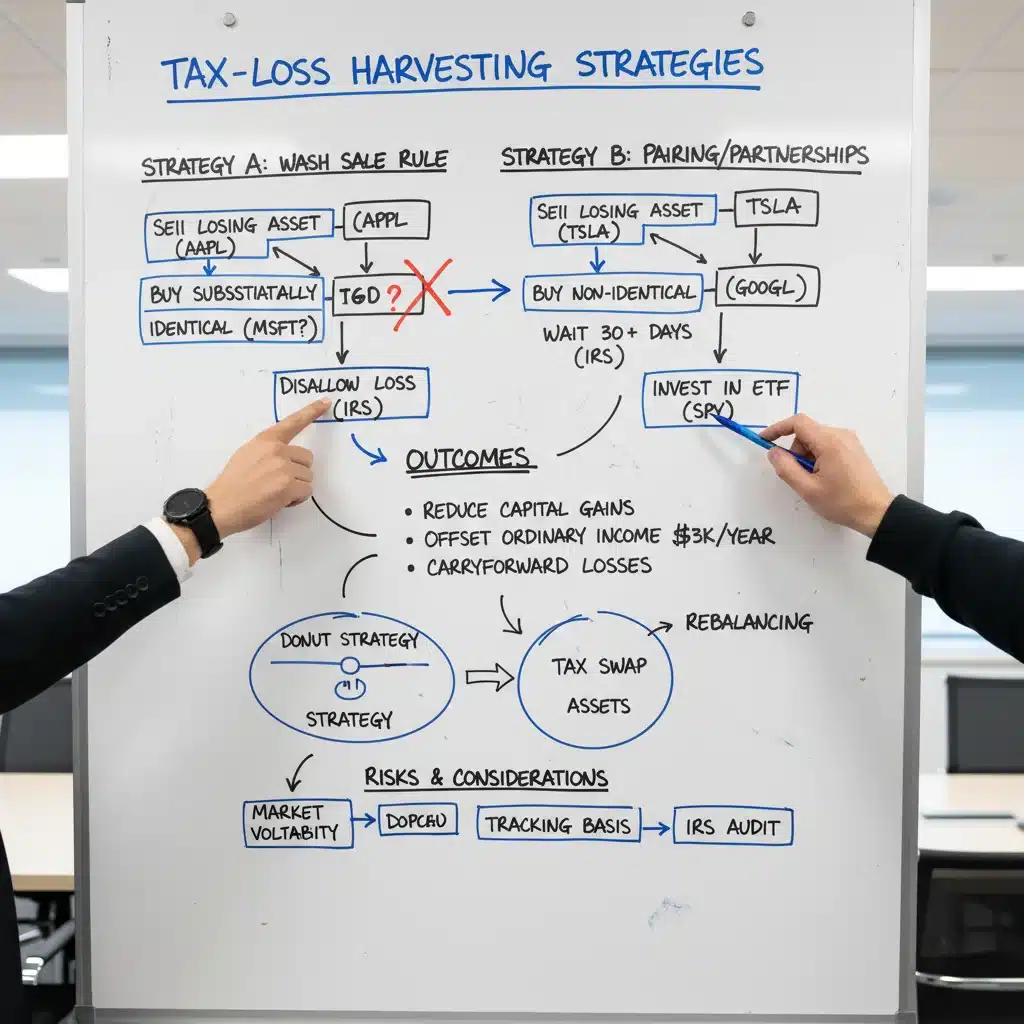
Tax-loss harvesting is one of the most effective and widely used strategies to reduce capital gains. This involves selling investments at a loss to offset capital gains you’ve realized or will realize. The beauty of tax-loss harvesting is that it can offset both short-term and long-term capital gains. If your capital losses exceed your capital gains, you can use up to $3,000 of the remaining loss to offset ordinary income each year. Any unused losses can be carried forward indefinitely to offset future capital gains and up to $3,000 of ordinary income annually.
For example, if you have a $10,000 short-term capital gain from selling a stock, and you also have an investment that has declined in value by $12,000, you could sell the losing investment. This would offset your $10,000 gain entirely, and you’d have a $2,000 loss left over to deduct against ordinary income. This strategy is particularly powerful in volatile markets, allowing investors to turn temporary market downturns into tax advantages for capital gains 2026.

2. Holding Period Management
As discussed, the distinction between short-term and long-term capital gains is critical. Simply holding an appreciated asset for more than one year can significantly reduce the tax rate applied to your gain. Before selling an asset, always check your holding period. If you’re close to the one-year mark, it might be financially advantageous to wait a few extra weeks or months to qualify for the lower long-term capital gains rates. This simple act of patience can save you a substantial amount on your capital gains 2026 tax bill.
3. Strategic Gifting of Appreciated Assets
Gifting appreciated assets can be a powerful tax planning tool, especially when dealing with capital gains 2026. When you gift an appreciated asset (like stock or real estate) to another individual, the recipient generally takes on your cost basis. If the recipient is in a lower tax bracket than you, they can sell the asset and pay less in capital gains tax. This strategy is particularly effective for gifting to children or grandchildren who are in the 0% or 15% long-term capital gains bracket.
However, be mindful of gift tax rules. You can gift up to a certain amount (e.g., $18,000 per recipient in 2024, subject to annual adjustments) without incurring gift tax or using up your lifetime gift tax exemption. Gifting to a charity can also provide significant tax benefits, as you typically avoid capital gains tax on the appreciation and can claim a charitable deduction for the fair market value of the asset.
4. Utilizing Tax-Advantaged Accounts
Investing within tax-advantaged accounts like 401(k)s, IRAs (Traditional and Roth), and 529 plans offers significant benefits when it comes to capital gains. Within these accounts, investments grow tax-deferred or even tax-free.
- Traditional IRAs and 401(k)s: Gains are not taxed until you withdraw the money in retirement. This allows your investments to grow without annual taxation on capital gains, compounding more rapidly over time.
- Roth IRAs and Roth 401(k)s: Qualified withdrawals in retirement are entirely tax-free, meaning you pay no tax on capital gains, ever. This is arguably the most powerful tool for avoiding capital gains 2026 taxes on your retirement investments.
- 529 Plans: Designed for educational expenses, qualified withdrawals from 529 plans are also tax-free, making them an excellent vehicle for saving for college without incurring capital gains taxes on investment growth.
Maximizing contributions to these accounts should be a cornerstone of your long-term financial planning and tax planning strategy, especially with an eye on managing capital gains 2026 and beyond.
5. Qualified Opportunity Funds (QOFs)
Qualified Opportunity Funds (QOFs) were created under the Tax Cuts and Jobs Act of 2017 to encourage long-term investments in designated low-income urban and rural communities (Opportunity Zones). Investors can defer or even exclude capital gains by reinvesting them into a QOF. The benefits include:
- Tax Deferral: Defer capital gains tax on the original investment until the end of 2026 or until you sell your QOF investment, whichever comes first.
- Basis Step-Up: If you hold the QOF investment for at least five years, your original deferred gain’s basis increases by 10%. If held for seven years, it increases by 15%.
- Tax Exemption: If you hold the QOF investment for at least 10 years, any capital gains from the QOF investment itself are entirely tax-free.
While the deferral period for the original gain ends in 2026, the long-term benefits of QOFs for new gains generated within the fund remain highly attractive. This can be a complex strategy, and careful due diligence is required, but it offers significant advantages for managing capital gains 2026 and future tax liabilities.
6. Real Estate Strategies: Primary Residence Exclusion
For homeowners, the sale of a primary residence offers a significant capital gains exclusion. If you’ve owned and lived in your home for at least two of the last five years leading up to the sale, you can exclude up to $250,000 of capital gains ($500,000 for married couples filing jointly). This exclusion can be used repeatedly, as long as you meet the eligibility criteria each time. This is a substantial benefit that can largely eliminate the capital gains 2026 tax burden for many homeowners.
For investment properties or secondary homes, the rules are different, and capital gains are generally taxable. However, strategies like 1031 exchanges (like-kind exchanges) can defer capital gains tax on the sale of investment property if you reinvest the proceeds into a similar property. This can be a powerful tool for real estate investors looking to defer their capital gains 2026 obligations and continue growing their portfolio.
7. Charitable Remainder Trusts (CRTs)
For individuals with highly appreciated assets and a charitable inclination, a Charitable Remainder Trust (CRT) can be an excellent strategy. You transfer appreciated assets into an irrevocable trust, which then sells the assets tax-free. The trust provides you with an income stream for a specified term or your lifetime. After the term ends, the remaining assets go to a charity of your choice.
The benefits include:
- Avoiding immediate capital gains tax on the sale of the appreciated asset.
- Receiving a stream of income.
- Claiming an immediate charitable income tax deduction for the present value of the remainder interest that will go to charity.
- Supporting a cause you care about.
CRTs are complex and typically suitable for larger estates, but they offer significant tax advantages for managing substantial capital gains 2026.
Potential Legislative Changes Affecting Capital Gains in 2026
The year 2026 is often cited as a critical year due to the scheduled expiration of several provisions from the Tax Cuts and Jobs Act (TCJA) of 2017. While many of these provisions primarily impact individual income tax rates and deductions, changes could indirectly or directly influence capital gains tax planning. It’s crucial for investors to stay abreast of potential legislative developments.
One area of continuous discussion revolves around the long-term capital gains rates themselves. While currently preferential, there are always proposals to adjust these rates, particularly for high-income earners. For instance, some proposals have suggested taxing long-term capital gains at ordinary income rates for individuals above a certain income threshold, or increasing the top long-term capital gains rate. While these are not currently law, being aware of such possibilities can help you anticipate and adapt your strategies for capital gains 2026.
Another area to monitor is the step-up in basis at death. Under current law, when an asset owner dies, the cost basis of their assets is ‘stepped up’ to the fair market value on the date of death. This means heirs can sell appreciated assets shortly after inheritance with little to no capital gains tax. There have been proposals to eliminate or modify the step-up in basis, which would significantly impact estate planning and the transfer of wealth. While the likelihood of such a change by 2026 is uncertain, it’s a critical factor for those engaged in intergenerational wealth transfer and long-term planning for capital gains 2026.
Given the dynamic nature of tax policy, consulting with a qualified tax advisor or financial planner is indispensable. They can provide personalized advice based on the latest legislative updates and your specific financial situation, ensuring your strategies for capital gains 2026 are robust and compliant.
Advanced Strategies and Considerations for 2026
Beyond the core strategies, several advanced techniques and considerations can further refine your approach to capital gains 2026.
8. Installment Sales
If you sell a property and receive payments over several years, you might be able to use the installment method. This allows you to spread the capital gains tax liability over the years you receive payments, rather than paying it all in the year of sale. This can be particularly beneficial for large asset sales, as it can help keep you in a lower tax bracket each year, thereby reducing your overall tax burden on capital gains 2026 and beyond.
9. Donor-Advised Funds (DAFs)
Similar to CRTs but often simpler to establish, Donor-Advised Funds (DAFs) allow you to donate appreciated assets to a public charity that sponsors the DAF. You receive an immediate tax deduction for the fair market value of the assets and avoid capital gains tax on the appreciation. The funds are then invested and grow tax-free, and you can recommend grants to your favorite charities over time. DAFs are an excellent tool for combining charitable giving with significant tax savings, especially when dealing with highly appreciated assets and planning for capital gains 2026.
10. Qualified Small Business Stock (QSBS) Exclusion
For investors in certain small businesses, Section 1202 of the Internal Revenue Code offers a powerful exclusion for capital gains from Qualified Small Business Stock (QSBS). If you meet specific criteria, including holding the stock for more than five years, you might be able to exclude a significant portion, or even all, of the capital gains from the sale of QSBS. The exclusion amount varies but can be up to $10 million or 10 times your basis in the stock, whichever is greater. This is a highly specialized area, and understanding the nuances is critical for maximizing its benefits related to capital gains 2026.
11. Net Investment Income Tax (NIIT)
Don’t forget about the Net Investment Income Tax (NIIT). For individuals with modified adjusted gross income (MAGI) above certain thresholds ($200,000 for single filers, $250,000 for married filing jointly in 2024, subject to adjustment), a 3.8% NIIT applies to net investment income, which includes capital gains. This tax is in addition to your regular capital gains tax. Strategies to manage your MAGI, such as tax-loss harvesting or deferring income, can also help reduce your exposure to the NIIT for capital gains 2026.
The Importance of Professional Guidance for Capital Gains 2026
While this article provides a comprehensive overview of strategies for managing capital gains 2026, the complexity of tax law and the individualized nature of financial situations underscore the importance of professional guidance. A qualified financial advisor or tax professional can:
- Assess Your Unique Situation: They can analyze your investment portfolio, income, and financial goals to recommend tailored strategies.
- Stay Updated on Legislation: Tax laws are constantly changing. Professionals remain current on new regulations and potential legislative shifts that could impact your capital gains.
- Identify Opportunities: They can help you uncover less obvious tax-saving opportunities that you might overlook.
- Ensure Compliance: Navigating tax rules can be intricate. A professional ensures you comply with all IRS regulations, avoiding costly errors.
- Integrate with Overall Financial Plan: Capital gains tax planning should not be isolated. A professional can integrate it into your broader financial, retirement, and estate planning.
Conclusion: Proactive Planning for Capital Gains 2026
The prospect of paying capital gains taxes can be daunting, but with proactive planning and a clear understanding of the available strategies, you can significantly reduce your tax burden. Whether it’s through careful holding period management, strategic tax-loss harvesting, leveraging tax-advantaged accounts, or exploring more advanced techniques like QOFs and CRTs, there are numerous avenues to optimize your after-tax returns.
As we approach 2026, the potential for legislative changes adds another layer of complexity, making vigilance and adaptability key. By implementing the strategies discussed, staying informed about tax policy developments, and seeking expert advice, you can approach capital gains 2026 with confidence, ensuring your wealth grows as efficiently as possible. Start planning today to secure a more financially sound future.