Tax Code Overhaul 2026: 7 Key Changes Impacting Small Business Deductions and Savings by 10%

Anúncios
Tax Code Overhaul 2026: 7 Key Changes Impacting Small Business Deductions and Savings by 10%
The year 2026 might seem a distant dot on the horizon, but for small business owners, it looms large with the promise – or threat – of a significant Tax Code Overhaul 2026. As the provisions of the Tax Cuts and Jobs Act (TCJA) of 2017 are set to expire, a new landscape for taxation is emerging, one that could profoundly impact your business’s bottom line. Understanding these changes now, and preparing for them, isn’t just smart; it’s essential for survival and growth. Our goal with this comprehensive guide is to illuminate the seven most critical changes you need to be aware of, offering actionable insights to help you navigate the new regulations, optimize your deductions, and potentially boost your savings by a remarkable 10%.
Small businesses are the backbone of the economy, and any shift in the tax code can create ripples that affect everything from hiring decisions to investment strategies. The impending Tax Code Overhaul 2026 is not merely a tweak; it’s a recalibration that demands your attention. From adjustments to individual income tax rates that affect pass-through entities to modifications in business expense deductions, the implications are far-reaching. Proactive planning can transform potential challenges into opportunities, allowing you to not only mitigate negative impacts but also identify new avenues for tax efficiency.
Anúncios
This article will delve into specific areas of change, providing clear explanations and practical advice. We’ll cover everything from the fate of the qualified business income (QBI) deduction to potential shifts in depreciation rules and interest expense limitations. By the end, you’ll have a clearer roadmap for preparing your business for the changes ahead and ensuring you’re positioned for maximum financial health.
1. The Sunset of Individual Income Tax Rate Reductions and Its Impact on Pass-Through Entities
One of the most significant aspects of the Tax Code Overhaul 2026 is the expiration of the individual income tax rate reductions established by the TCJA. These reductions, which lowered rates across most income brackets, have directly benefited many small businesses structured as pass-through entities – such as sole proprietorships, partnerships, and S corporations. For these businesses, profits are not taxed at the corporate level but rather ‘pass through’ to the owners’ personal income tax returns.
When these lower individual rates revert to their pre-TCJA levels, business owners could face a higher tax burden on their business income. For example, the top individual income tax rate, which was reduced from 39.6% to 37%, is slated to return to 39.6%. This increase, while seemingly small, can translate into substantial additional tax liabilities for profitable small businesses. Owners will need to re-evaluate their personal tax strategies in conjunction with their business’s financial planning.
Strategies for Mitigation:
- Income Shifting: Explore strategies to shift income or deductions between years, if permissible, to take advantage of current lower rates.
- Retirement Contributions: Maximize contributions to tax-advantaged retirement accounts (e.g., SEP IRAs, Solo 401(k)s) to reduce taxable income.
- Entity Classification Review: Re-evaluate your business entity structure. While changing entity types is a complex decision with various non-tax implications, it might be worth exploring if a C-corporation structure becomes more advantageous under the new tax regime, especially if the corporate tax rate remains lower than the top individual rates. This decision requires careful analysis with a tax professional.
- Understand Your Tax Bracket: Know exactly where your business income places you and your partners in the individual tax brackets. This knowledge is crucial for predicting your future tax liability under the new rates.
- Forecasting: Work with a tax advisor to forecast your tax liability under the projected 2026 rates. This foresight allows for proactive adjustments to your business and personal financial plans.
The impact of these changes on pass-through entities cannot be overstated. It’s not just about paying more tax; it’s about the cash flow available for reinvestment, expansion, and owner compensation. Being prepared for this aspect of the Tax Code Overhaul 2026 is paramount.
2. The Fate of the Qualified Business Income (QBI) Deduction (Section 199A)
Perhaps one of the most celebrated provisions for small businesses under the TCJA was the Qualified Business Income (QBI) deduction, also known as the Section 199A deduction. This provision allows eligible pass-through entity owners to deduct up to 20% of their qualified business income, subject to certain limitations based on taxable income, W-2 wages, and unadjusted basis of qualified property. This deduction has been a significant tax relief for countless small businesses.
Unfortunately, like the individual income tax rate reductions, the QBI deduction is also slated to expire at the end of 2025. This means that, barring new legislation, small business owners will lose this valuable deduction, leading to a direct increase in their taxable income and, consequently, their tax liability. The loss of this 20% deduction could single-handedly eliminate many of the tax savings small businesses have enjoyed over the past few years.
Strategies for Mitigation:
- Maximize QBI Deduction While It Lasts: Ensure you are fully utilizing the QBI deduction for the 2024 and 2025 tax years. Review your business structure and income to ensure maximum eligibility.
- Explore Other Deductions: With the QBI deduction gone, it becomes even more critical to maximize other available business deductions. This includes everything from legitimate business expenses to depreciation and amortization.
- Capitalize on Qualified Property: If your business invests in qualified property (e.g., certain tangible depreciable property), understanding the rules around it for the remaining years of the QBI deduction can be beneficial.
- Review Income Thresholds: Be aware of the income thresholds associated with the QBI deduction. Strategic planning around these thresholds in the remaining years can optimize your deduction.
- Advocate for Extension: While individual businesses have limited power, staying informed about legislative efforts to extend or modify the QBI deduction is important. Support industry groups that lobby for its continuation.
The disappearance of the QBI deduction will be a substantial change under the Tax Code Overhaul 2026. Businesses that have relied heavily on this deduction for tax savings will need to find alternative strategies to offset their increased tax burden.
3. Changes to Business Expense Deductions and Depreciation
Beyond the QBI deduction, the Tax Code Overhaul 2026 is expected to bring modifications to various business expense deductions and depreciation rules. While some changes might be less dramatic than the QBI expiration, their cumulative effect can be significant for small businesses.
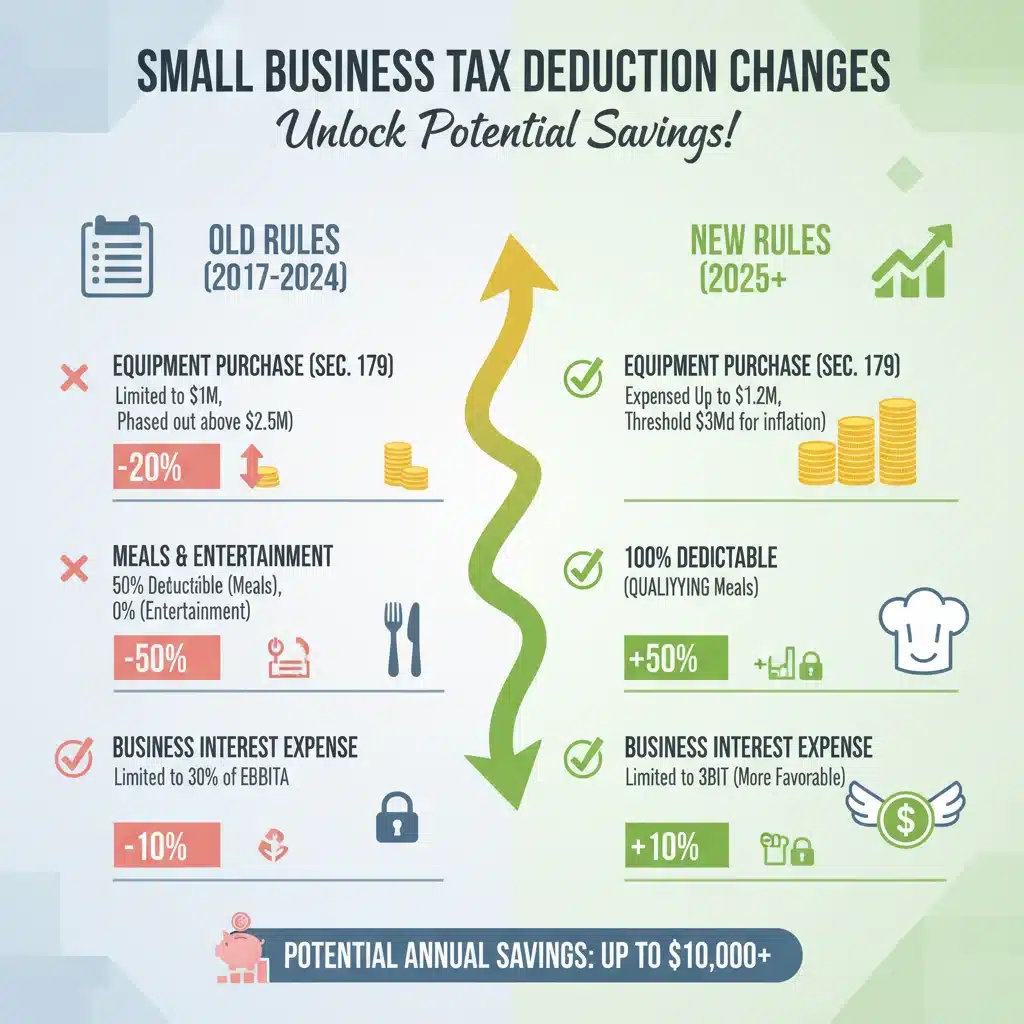
One area to watch is Bonus Depreciation. The TCJA allowed for 100% bonus depreciation for qualified new and used property placed in service after September 27, 2017, and before January 1, 2023. This percentage began to phase down to 80% for property placed in service in 2023, 60% in 2024, 40% in 2025, and 20% in 2026, before being eliminated in 2027. This gradual phase-out means businesses will have less immediate write-off capability for capital expenditures.
Another area of focus is the treatment of Research and Development (R&D) Expenses. For tax years beginning after December 31, 2021, businesses are required to amortize R&D expenses over five years (or 15 years for foreign R&D). Previously, these expenses could be deducted in the year incurred. While this change already took effect, it’s part of the broader context of changing expense treatments that will continue into and beyond the Tax Code Overhaul 2026.
Strategies for Mitigation:
- Accelerate Capital Expenditures: If you plan significant capital investments, consider making them before the bonus depreciation percentage further diminishes in 2025 and 2026 to maximize immediate write-offs.
- Section 179 Expensing: While bonus depreciation is phasing out, Section 179 expensing remains a powerful tool for small businesses. This allows businesses to deduct the full purchase price of qualifying equipment and/or software purchased or financed during the tax year, up to certain limits. Stay updated on the annual limits.
- R&D Tax Credits: If your business engages in R&D activities, explore federal and state R&D tax credits. These credits can help offset the impact of the required amortization of R&D expenses.
- Detailed Record Keeping: Maintain meticulous records of all business expenses. As rules become more stringent, thorough documentation will be crucial for substantiating deductions.
- Depreciation Schedule Review: Work with your accountant to review your depreciation schedules and understand the long-term impact of phased-out bonus depreciation.
4. Potential Changes to Interest Expense Limitations (Section 163(j))
The TCJA introduced limitations on the deduction of business interest expense under Section 163(j). For tax years beginning after December 31, 2021, the limitation tightened. Previously, the deductible amount of business interest expense was limited to 30% of adjusted taxable income (ATI), plus business interest income and floor plan financing interest. For tax years beginning in 2022 and beyond, the definition of ATI no longer includes depreciation, amortization, or depletion add-backs, making the limitation more restrictive.
This change has already impacted businesses with significant debt financing, and the Tax Code Overhaul 2026 could see further modifications or solidifications of this stricter limitation. For small businesses that rely on loans for expansion, equipment purchases, or working capital, the inability to fully deduct interest expenses can significantly increase their taxable income and overall tax burden.
Strategies for Mitigation:
- Debt Management: Review your business’s debt structure. Consider strategies to reduce overall debt, refinance at lower interest rates, or explore alternative financing options that may not be subject to these limitations.
- Cash Flow Planning: Optimize cash flow to reduce reliance on interest-bearing debt. Stronger cash reserves can minimize the need for external financing.
- Understand Your ATI: Work with your tax professional to accurately calculate your adjusted taxable income (ATI) and understand how the interest expense limitation applies to your specific business.
- Project Interest Expense: Forecast your projected interest expenses against your anticipated ATI to identify potential limitations and plan accordingly.
- Explore Equity Financing: For growth-oriented businesses, consider equity financing as an alternative to debt, as dividends paid to investors are not subject to interest expense limitations.
The stricter interest expense limitations under the Tax Code Overhaul 2026 environment will require careful financial planning, especially for capital-intensive small businesses.
5. Reinstatement of Certain Itemized Deductions for Individuals Affecting Owners
While primarily impacting individuals, the reinstatement or modification of certain itemized deductions and personal exemptions can indirectly affect small business owners, especially those operating pass-through entities. The TCJA eliminated personal exemptions and significantly limited many itemized deductions, such as the state and local tax (SALT) deduction to $10,000.
As part of the Tax Code Overhaul 2026, there’s potential for these provisions to revert to pre-TCJA rules or be modified. If the SALT cap is lifted or personal exemptions return, it could lower the overall personal tax burden for many small business owners, freeing up more disposable income or allowing for greater personal investment in their businesses. Conversely, if these deductions remain limited or are further restricted, it could add to the financial pressure on owners.
Strategies for Mitigation:
- Personal Tax Planning: Work with a financial planner to understand how potential changes to itemized deductions and personal exemptions will impact your personal tax liability.
- State-Specific Strategies: If the SALT cap is lifted, explore state-specific strategies to maximize these deductions.
- Charitable Contributions: Review your charitable giving strategies. If itemized deduction rules change, the tax efficiency of your donations might shift.
- Health Savings Accounts (HSAs): Maximize contributions to HSAs, which offer a triple tax advantage (tax-deductible contributions, tax-free growth, and tax-free withdrawals for qualified medical expenses). These remain valuable regardless of other deduction changes.
Staying informed about these individual-level changes as part of the broader Tax Code Overhaul 2026 is crucial for holistic financial planning for small business owners.
6. Potential Changes to Estate and Gift Tax Exemptions
Another significant area affected by the TCJA that is set to revert as part of the Tax Code Overhaul 2026 is the estate and gift tax exemption. The TCJA dramatically increased the basic exclusion amount for estate and gift taxes, effectively allowing individuals to transfer a much larger amount of wealth tax-free. For 2024, this amount is $13.61 million per individual ($27.22 million for a married couple).
Upon the expiration of the TCJA provisions, this exemption amount is scheduled to revert to its pre-TCJA level, adjusted for inflation, which is estimated to be around $7 million per individual. This change has profound implications for small business owners, particularly those planning for succession or looking to pass their business assets to the next generation.
Strategies for Mitigation:
- Review Estate Plan: Immediately review and update your estate plan with an attorney and financial advisor. If you have significant assets, including your business, and wish to transfer them tax-free, utilizing the current higher exemption amounts before 2026 is critical.
- Gifting Strategies: Consider making substantial gifts before the end of 2025 to take advantage of the higher gift tax exclusion. The IRS has clarified that gifts made under the higher exemption amounts will not be clawed back if the exemption decreases later.
- Business Valuation: Obtain an accurate valuation of your business. This is essential for estate planning purposes, especially when considering gifting or succession.
- Succession Planning: Integrate potential estate tax changes into your business succession plan. This might involve setting up trusts, family limited partnerships, or other structures designed to minimize future estate tax liabilities.
- Life Insurance: Explore life insurance policies as a tool to provide liquidity for potential estate taxes, ensuring your heirs don’t have to sell business assets to cover tax obligations.
For many small business owners, their business represents a lifetime of work and the primary source of their wealth. The changes to estate and gift tax exemptions under the Tax Code Overhaul 2026 demand immediate and careful attention to ensure a smooth and tax-efficient transfer of assets.
7. Increased Scrutiny and Enforcement by the IRS
While not a direct tax rate or deduction change, an often-overlooked aspect of future tax environments, including the period surrounding the Tax Code Overhaul 2026, is the potential for increased IRS scrutiny and enforcement. With substantial new funding allocated to the IRS, there is a clear directive to enhance compliance and audit capabilities.
This means small businesses can expect a higher likelihood of audits, more stringent reviews of deductions, and increased focus on areas prone to non-compliance. While diligent businesses have nothing to fear, those with less robust record-keeping or aggressive tax positions could face significant challenges. The IRS is investing in technology and personnel to identify discrepancies and ensure taxpayers are meeting their obligations.

Strategies for Mitigation:
- Impeccable Record Keeping: This cannot be stressed enough. Maintain detailed, organized records for all income, expenses, deductions, and credits. Digital records are often preferred for their searchability and ease of backup.
- Professional Guidance: Engage with a qualified tax professional (CPA or Enrolled Agent) who is up-to-date on the latest tax laws and can provide expert advice. Their expertise is invaluable in navigating complex regulations and representing you in case of an audit.
- Compliance Checks: Regularly conduct internal compliance checks. Review your accounting practices and ensure they align with current tax laws.
- Understand New Reporting Requirements: Stay informed about any new reporting requirements that may emerge as part of the Tax Code Overhaul 2026 or subsequent legislation.
- Proactive Adjustments: If you’ve been taking aggressive tax positions, consult with your tax advisor to assess the risk and consider making more conservative adjustments to avoid potential issues.
The enhanced enforcement environment means that preparation and accuracy will be more critical than ever for small businesses navigating the Tax Code Overhaul 2026.
How to Potentially Boost Your Savings by 10% (and Beyond!)
Navigating the Tax Code Overhaul 2026 successfully isn’t just about avoiding penalties; it’s about optimizing your financial strategy to achieve significant savings. While a 10% boost in savings might seem ambitious, it’s entirely achievable through a combination of proactive planning, diligent execution, and expert guidance. Here’s a summary of how to achieve this:
- Early and Continuous Planning: Don’t wait until 2025 to start planning. Begin now. Regularly review your financial situation with your tax advisor. This continuous engagement allows for timely adjustments and strategic decisions.
- Optimize Entity Structure: Re-evaluate your business entity type. As tax laws change, what was once optimal may no longer be. A C-corp might become more attractive if corporate rates remain low while individual rates rise significantly.
- Maximize Remaining Deductions and Credits: Ensure you are fully utilizing all available deductions and credits for the current and upcoming tax years before the Tax Code Overhaul 2026. This includes bonus depreciation, Section 179, and R&D credits.
- Strategic Capital Expenditures: Plan your major equipment purchases and investments to align with the most favorable depreciation rules before they phase out.
- Robust Retirement Planning: Maximize contributions to tax-advantaged retirement accounts for yourself and your employees. This reduces taxable income and builds future wealth.
- Personal Financial Health: Don’t overlook your personal tax situation. Changes to individual deductions and rates will directly impact your overall financial picture as a business owner.
- Expert Advisory Team: Build a strong team of advisors – a knowledgeable CPA, a financial planner, and potentially an attorney – who can provide holistic guidance tailored to your specific business and personal circumstances.
- Stay Informed: Tax laws are dynamic. Subscribe to reputable tax news sources, attend webinars, and work with advisors who keep you updated on legislative developments that could impact the Tax Code Overhaul 2026.
- Scenario Planning: Work with your tax advisor to model different tax scenarios for 2026 and beyond. Understanding the potential range of outcomes can help you prepare for various eventualities.
- Cost-Benefit Analysis: For every significant financial decision, perform a thorough cost-benefit analysis that includes the tax implications. Sometimes, a slightly higher upfront cost can lead to substantial tax savings.
Conclusion: Proactive Planning is Your Best Defense Against the Tax Code Overhaul 2026
The impending Tax Code Overhaul 2026 presents both challenges and opportunities for small businesses. The sunset of key TCJA provisions, including lower individual tax rates and the QBI deduction, alongside potential changes to depreciation and interest expense limitations, necessitates a proactive and informed approach. The increased likelihood of IRS scrutiny further underscores the importance of meticulous record-keeping and professional guidance.
By understanding these seven critical areas of change and implementing the strategies outlined, small business owners can not only mitigate potential negative impacts but also identify new avenues for tax efficiency and savings. The goal is not just to comply with the new rules but to thrive within them. Engage with your tax professionals, review your financial strategies, and start planning today to ensure your business is well-positioned for success in the evolving tax landscape of 2026 and beyond. Your diligence now can translate into significant savings and sustained growth for your business.