2026 Federal Education Policy: Student Loan Impact Outlook
Anúncios
The 2026 Shift: How New Federal Education Policies Will Impact Student Loans – A 3-Month Outlook for US Borrowers
The landscape of higher education finance in the United States is perpetually shifting, and 2026 is poised to bring significant changes. As we approach this pivotal year, understanding how new federal education policies will impact student loans is paramount for millions of US borrowers. This article aims to provide a comprehensive, 3-month outlook, dissecting the potential reforms, their implications, and what borrowers can do to prepare. The stakes are high, with potential adjustments to interest rates, repayment plans, and even loan forgiveness programs. Staying informed is not just recommended; it’s essential.
Anúncios
The federal government’s role in student lending is extensive, influencing everything from the availability of loans to the terms of their repayment. Any modification to these federal education policies can have a ripple effect across the entire system, affecting current students, recent graduates, and even those who have been repaying their loans for years. Our goal here is to cut through the noise, offering clear, actionable insights into what the 2026 shift might mean for your financial future.
Understanding the Current Federal Education Policies Landscape
Before we delve into the future, it’s crucial to grasp the existing framework of federal education policies governing student loans. Currently, the system is a complex tapestry of various loan types, repayment plans, and forgiveness options. Federal student loans, primarily offered through the William D. Ford Federal Direct Loan Program, include Direct Subsidized Loans, Direct Unsubsidized Loans, Direct PLUS Loans, and Direct Consolidation Loans. Each comes with its own set of rules regarding interest accrual, eligibility, and repayment terms.
Repayment plans are another critical component. Borrowers can choose from standard, graduated, extended, or various income-driven repayment (IDR) plans. IDR plans, such as PAYE, REPAYE, IBR, and ICR, adjust monthly payments based on a borrower’s income and family size, often leading to loan forgiveness after 20 or 25 years of qualifying payments. Public Service Loan Forgiveness (PSLF) offers another pathway to forgiveness for those working in qualifying public service jobs for 10 years.
Interest rates for federal student loans are fixed and determined annually by Congress. They vary depending on the loan type and the disbursement date. It’s also worth noting the ongoing discussions around interest capitalization, which can significantly increase the total amount repaid over the life of a loan. These existing federal education policies form the baseline against which any new reforms will be measured, making their understanding foundational to anticipating future changes.
Key Components of Existing Student Loan Policies:
- Loan Types: Direct Subsidized, Unsubsidized, PLUS, Consolidation.
- Repayment Plans: Standard, Graduated, Extended, Income-Driven (IDR).
- Forgiveness Programs: PSLF, IDR forgiveness after 20/25 years.
- Interest Rates: Fixed, set annually by Congress.
- Loan Servicers: Companies managing loan accounts on behalf of the federal government.
The sheer volume and complexity of these existing federal education policies often lead to confusion and frustration among borrowers. This complexity is precisely why any upcoming changes need careful scrutiny and clear communication. The aim of many proposed reforms is often to simplify the system, make it more equitable, or address rising student debt levels, but the execution of these changes can be challenging.
The Drivers Behind the 2026 Policy Shift
What’s prompting these anticipated changes in federal education policies for 2026? Several factors contribute to the ongoing debate and push for reform. The soaring national student debt, currently exceeding $1.7 trillion, is a primary catalyst. This immense debt burden impacts individual borrowers, the economy, and future educational attainment. Policymakers are continually seeking ways to alleviate this burden without creating undue strain on federal budgets.
Economic conditions also play a significant role. Inflationary pressures, changes in employment rates, and the overall health of the economy can influence how accessible and affordable higher education is perceived. When economic downturns hit, student loan defaults tend to rise, prompting calls for more robust safety nets and flexible repayment options through revised federal education policies.
Moreover, there’s an ongoing discussion about the value proposition of a college degree. As tuition costs continue to outpace wage growth, questions arise about whether the current student loan system adequately supports students in achieving positive post-graduation outcomes. Equity concerns are also central, with policymakers examining how existing policies disproportionately affect certain demographic groups, particularly low-income borrowers and borrowers of color. The goal is often to create more equitable access and outcomes through adjustments to federal education policies.
Key Drivers for Policy Reform:
- Rising Student Debt: National debt exceeding $1.7 trillion.
- Economic Impact: Inflation, employment rates, default risks.
- Value of Higher Education: Tuition costs vs. wage growth.
- Equity Concerns: Disproportionate impact on vulnerable groups.
- Administrative Simplification: Reducing complexity for borrowers and servicers.
Political cycles and legislative priorities also heavily influence the timing and nature of policy changes. With new administrations and congressional compositions, different approaches to higher education finance come to the forefront. The lead-up to 2026 is likely to be characterized by intense debate, lobbying efforts, and legislative maneuvering as various stakeholders advocate for their preferred reforms to federal education policies.
Anticipated Changes in Federal Education Policies for 2026: A 3-Month Outlook
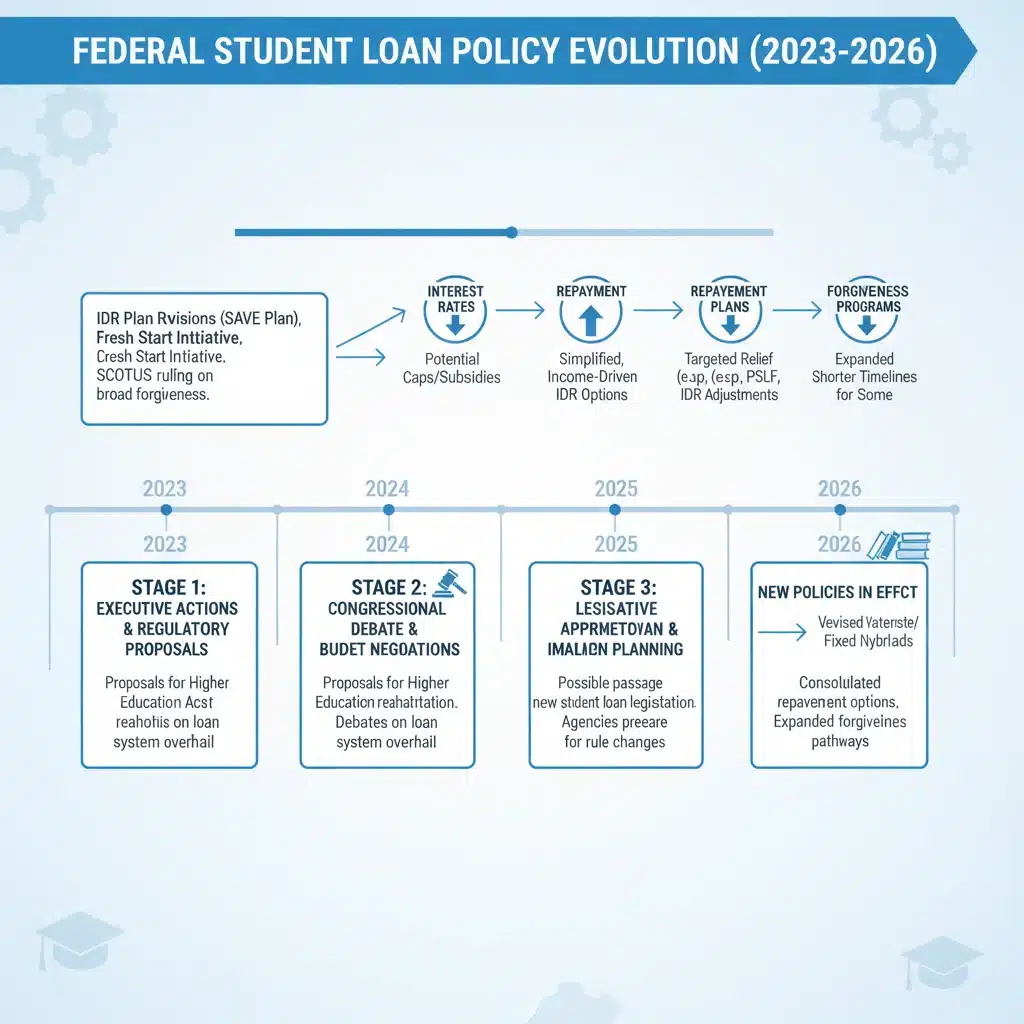
While specific legislative details are still emerging, we can project several key areas where new federal education policies are likely to bring changes by 2026. This 3-month outlook focuses on what’s currently on the table and how it might materialize.
Potential Reforms to Repayment Plans
One of the most discussed areas of reform involves income-driven repayment (IDR) plans. The existing IDR landscape is often criticized for its complexity and administrative burden. We anticipate movements toward simplifying these plans, potentially consolidating them into fewer, more streamlined options. This could involve adjusting the percentage of discretionary income used for payments, or altering the definition of discretionary income itself. For instance, some proposals suggest increasing the income threshold before payments begin, offering more relief to low-income borrowers.
Another potential change relates to the duration of IDR plans and the timeline for forgiveness. There’s a push to reduce the number of years required for forgiveness, especially for borrowers with smaller loan balances, to provide faster relief. Any such changes to federal education policies would significantly impact monthly payments and the total amount repaid over time.
Changes to Interest Rates and Accrual
Interest rates are a perennial point of contention. While Congress sets rates annually, there’s ongoing debate about fundamental changes to how interest accrues, particularly for subsidized loans. Some proposals advocate for eliminating interest capitalization in certain scenarios, preventing interest from being added to the principal balance, which can lead to rapid loan growth. Other discussions revolve around potentially capping interest rates or introducing variable rates tied to economic indicators, although fixed rates have historically been preferred for stability.
Any adjustment to how interest is calculated or applied under new federal education policies could have a profound effect on the total cost of borrowing. Even a slight reduction in interest rates or a change in capitalization rules could save borrowers thousands of dollars over the life of their loans, making these reforms highly anticipated.
Expansion or Modification of Loan Forgiveness Programs
Loan forgiveness remains a high-priority area. While broad-based forgiveness has been a topic of intense debate, more targeted expansions or modifications to existing programs like PSLF and IDR forgiveness are more likely under new federal education policies. This could involve simplifying the PSLF application process, making more employers or payment types eligible, or providing clearer guidance on qualifying employment.
For IDR forgiveness, there’s a possibility of clearer pathways for borrowers to track their qualifying payments and a more automated process for forgiveness once the term is met. The goal is to ensure that these programs, designed to alleviate debt for those who meet specific criteria, are more accessible and effective. Furthermore, we might see new targeted forgiveness programs for specific professions facing critical shortages or for borrowers who attended predatory institutions.
Potential Impact on Private Student Loans
While most federal education policies directly affect federal student loans, changes here can indirectly influence the private loan market. If federal loans become more attractive due to lower interest rates or better repayment terms, demand for private loans might decrease, potentially leading private lenders to adjust their offerings to remain competitive. Conversely, if federal loan access becomes more restricted, the private market could see increased activity. Borrowers with both federal and private loans should monitor these dynamics closely, as the overall financial environment for student debt could shift.
What These Policy Changes Mean for US Borrowers
The potential shifts in federal education policies for 2026 carry significant implications for millions of US borrowers. Understanding these impacts is the first step toward effective financial planning.
For Current Students and Future Borrowers
New federal education policies could alter the terms of loans taken out in 2026 and beyond. This might mean different interest rates, new eligibility requirements for subsidized loans, or a revised menu of repayment options. Future borrowers might find the application process simpler or more complex, depending on the nature of the reforms. It’s crucial for prospective students to stay informed about these changes as they plan their financing for higher education. The availability and terms of federal aid can heavily influence college choice and financial burden post-graduation.
For Borrowers in Repayment
Existing borrowers, particularly those on IDR plans or pursuing PSLF, will need to pay close attention. Changes to repayment calculations, forgiveness timelines, or eligibility criteria could directly affect their current loan strategies. While legislative changes often include provisions to protect existing borrowers or offer transition periods, it’s not guaranteed. Borrowers might need to re-evaluate their repayment plan choices or consolidate their loans to take advantage of new benefits or mitigate adverse effects of new federal education policies.
For Those Nearing Forgiveness
Borrowers close to achieving loan forgiveness through IDR or PSLF will be particularly keen on how these federal education policies evolve. Any simplification or clarification of forgiveness rules could be highly beneficial, potentially accelerating their path to debt relief. Conversely, unforeseen changes could introduce new hurdles. It’s advisable for these borrowers to keep meticulous records of their payments and employment history, and to regularly communicate with their loan servicers.
Preparing for the 2026 Federal Education Policy Shift: A 3-Month Action Plan
Given the anticipated changes, a proactive approach is key. Here’s a 3-month action plan for US borrowers to prepare for the impact of new federal education policies.
Month 1: Assess Your Current Situation
Review Your Loan Portfolio: Gather all documents related to your federal student loans. Understand the types of loans you have (subsidized, unsubsidized, PLUS), their interest rates, and your current principal balances. Log into your Federal Student Aid (FSA) account at studentaid.gov to get an accurate, consolidated view of your federal loans.
Understand Your Repayment Plan: If you’re currently in repayment, verify which plan you’re on (Standard, Graduated, IDR, etc.). Understand its terms, including your monthly payment, the remaining term, and any potential for forgiveness. If you’re on an IDR plan, confirm your last income certification date.
Check Forgiveness Progress: If you’re pursuing PSLF or IDR forgiveness, ensure all your employment certifications are up to date and that you understand how many qualifying payments you’ve made. Keep copies of all correspondence with your servicer.
Assess Your Financial Health: Take stock of your current income, expenses, and overall budget. This will help you understand your capacity to absorb any changes in monthly payments or to explore new repayment options under revised federal education policies.
Month 2: Stay Informed and Seek Guidance
Monitor Official Sources: Regularly check official government websites like studentaid.gov for updates on legislative proposals and enacted federal education policies. Avoid relying solely on social media or unofficial news sources, which can sometimes spread misinformation.
Sign Up for Alerts: Subscribe to email newsletters from reputable organizations that track student loan policy, such as the Department of Education, consumer advocacy groups, and financial aid professional associations.
Consult with Your Loan Servicer: While they may not have all the answers about future policies, your loan servicer can provide accurate information about your current loans and explain how potential changes might affect existing programs. Be prepared with specific questions.
Consider Professional Advice: If your situation is complex, or if you have a significant amount of student debt, consider consulting with a non-profit credit counselor specializing in student loans or a financial advisor. They can help you interpret potential changes in federal education policies and strategize accordingly.
Month 3: Plan and Adapt
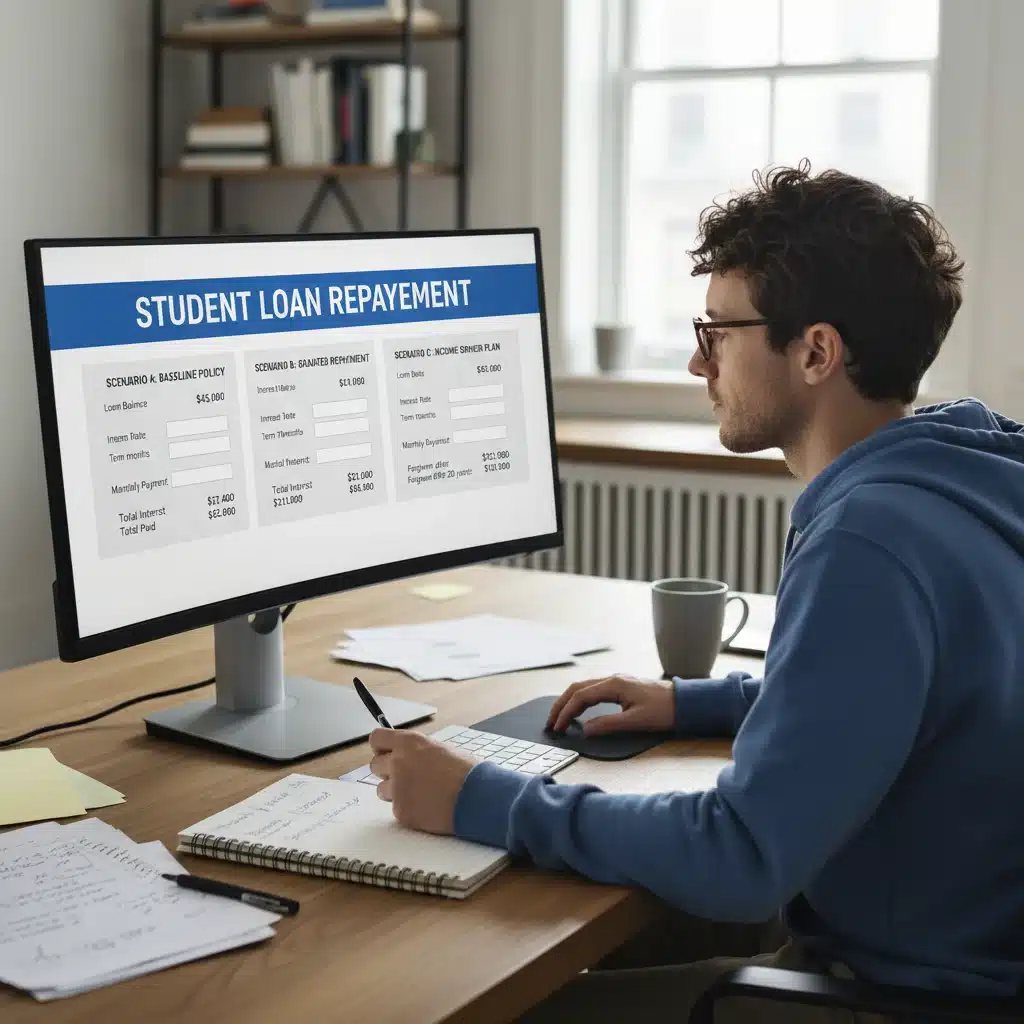
Model Different Scenarios: Based on the anticipated changes, try to model how different outcomes might affect your monthly payments and total repayment. Use online calculators or spreadsheets to project scenarios (e.g., if interest rates increase by X%, or if your IDR payment calculation changes).
Adjust Your Budget: If it appears that your payments might increase, start identifying areas in your budget where you can cut back to accommodate these potential changes. Building an emergency fund can also provide a crucial buffer.
Explore Consolidation (Carefully): If new federal education policies offer favorable consolidation terms or benefits, research if consolidating your loans would be advantageous. Be cautious, as consolidating federal loans can sometimes lead to the loss of certain benefits, so weigh the pros and cons carefully.
Prepare for Action: Once new policies are confirmed, be ready to act. This might involve applying for a new repayment plan, re-certifying your income, or submitting updated PSLF forms. Timeliness can be critical to maximizing benefits or minimizing negative impacts.
The Long-Term Outlook Beyond 2026
While our immediate focus is on the 2026 shift in federal education policies, it’s important to recognize that student loan reform is an ongoing process. The discussions and debates around higher education finance will continue long after 2026. Future reforms may address issues such as college affordability, accountability for educational institutions, and further simplification of the student aid system.
The trajectory of future federal education policies will likely be influenced by economic trends, demographic shifts, and evolving political priorities. As a borrower, maintaining a long-term perspective and staying engaged with these developments is crucial. The goal is not just to react to immediate changes but to understand the broader direction of student loan policy and position yourself for financial resilience in the years to come.
The landscape of student loans is dynamic, and continuous adaptation will be necessary. By staying informed, planning proactively, and seeking expert advice when needed, US borrowers can navigate the complexities of federal education policies and make informed decisions that support their financial well-being.
Conclusion: Navigating the Future of Student Loans
The impending 2026 shift in federal education policies represents a critical juncture for millions of US student loan borrowers. From potential reforms to income-driven repayment plans and adjustments to interest rate accrual, to modifications in loan forgiveness programs, the changes could be far-reaching. While the specifics are still being finalized, a proactive and informed approach is the best defense against uncertainty.
By taking the time to understand your current loan situation, staying abreast of legislative developments, and implementing a strategic 3-month action plan, you can effectively prepare for what’s to come. The future of student loans is intricately tied to these overarching federal education policies, and your ability to adapt will be key to managing your educational debt successfully. Empower yourself with knowledge, take deliberate steps, and ensure you are well-positioned to thrive in the evolving landscape of higher education finance.